Blog
Owning fine jewellery and luxury watches involves far more than selecting beautiful pieces. Behind every purchase lies a web of practical considerations that can significantly impact your finances, your security, and even your reputation in professional or social settings. Whether you are building a collection as an investment, insuring a family heirloom, or simply wondering which necklace length photographs best on a video call, the details matter.
This resource brings together the key topics every UK collector and enthusiast should understand. From Capital Gains Tax exemptions on certain gold coins to the social faux pas of wearing a diver’s watch with black tie, the subjects covered here represent the most pressing questions raised by those navigating the world of valuable adornments. Each section introduces core concepts and highlights the nuances that can make a tangible difference to your decisions.
How Does Jewellery Retain and Build Investment Value?
Not all jewellery appreciates equally. During economic downturns, certain pieces hold their value while others plummet. Understanding which factors contribute to resilience is essential before committing significant capital. Limited edition releases, for instance, frequently surge in value once discontinued, driven by scarcity and collector demand.
The Role of Liquidity in Investment Decisions
A common mistake is purchasing items that prove almost impossible to sell. Diamonds, for example, often suffer from poor liquidity because the resale market is fragmented and buyback offers rarely match retail prices. Gold chains and sovereign coins, by contrast, benefit from transparent pricing linked to daily bullion rates, making them easier to convert to cash when needed.
Timing Your Sale for Maximum Returns
Seasonal patterns affect gold prices and buyer behaviour. Historical data suggests that certain months yield better returns for sellers, influenced by wedding seasons, festive gifting periods, and fluctuations in global demand. Monitoring these cycles can add hundreds of pounds to your final sale price.
What Insurance Coverage Do Watches and Jewellery Require?
Standard home insurance policies frequently leave valuable items underprotected. Many policies impose a single-item limit of around £5,000, meaning a Rolex or high-carat diamond ring may not be fully covered without a specific endorsement. This gap leaves collectors exposed to significant financial loss.
Photography and Documentation for Claims
Insurers require proof of ownership and condition. Learning how to photograph your watch correctly, capturing serial numbers, box, papers, and distinguishing details, dramatically increases the likelihood of a successful claim. Poor documentation remains one of the most common reasons claims are reduced or rejected.
Home Safes, Graded Security and Vault Storage
Some policies mandate a graded safe for home storage above certain values. Others require offsite vault storage. Weighing the annual cost of vault fees against the insurance premium savings helps determine the most cost-effective approach for your collection size and risk tolerance.
Which UK Tax Rules Apply to Jewellery Transactions?
Tax efficiency is often overlooked by collectors. The VAT margin scheme can reduce the tax burden when purchasing from dealers who use it, while buying new jewellery at full retail means absorbing 20% VAT that cannot be reclaimed upon resale.
Capital Gains Tax and Exempt Coins
UK legal tender gold coins such as Britannias and sovereigns are exempt from Capital Gains Tax, unlike Krugerrands or other foreign bullion. This distinction can save thousands on profitable sales. The personal chattels allowance also provides a route to sell individual items under a certain threshold completely tax-free.
Cash Purchases and Reporting Thresholds
Buying gold with cash over £10,000 triggers anti-money laundering checks and dealer reporting obligations. Understanding these thresholds before arriving at a dealer avoids delays and potential complications during high-value transactions.
How Do You Buy and Sell Safely on Resale Platforms?
Online marketplaces have revolutionised the secondary luxury market, but each platform carries distinct risks and rewards. Comparing seller fees across eBay, Vestiaire Collective and specialist watch forums reveals surprising differences in net profit.
Authentication and the Limits of Technology
Platform authentication services provide reassurance, yet AI photo verification cannot reliably detect high-quality super-fakes. Knowing the limitations of these systems, and understanding the process for returning an item if authenticity is disputed, protects buyers from costly mistakes. Japanese sellers on eBay, for example, maintain a strong reputation for accuracy due to strict domestic trading laws.
Shipping Insurance Pitfalls
A single packaging error can void your shipping insurance entirely. Using incorrect boxes, failing to obtain proof of posting, or undervaluing declarations are common mistakes that leave sellers without recourse when parcels are lost or damaged.
What Etiquette Rules Govern Jewellery at Formal Occasions?
British social conventions around jewellery remain surprisingly prescriptive. Wearing a tiara before 6pm, pairing a diver’s watch with a tuxedo, or choosing diamonds for a daytime event can all be considered breaches of etiquette in traditional circles.
Black Tie and White Tie Standards
For men, the choice between onyx or mother of pearl shirt studs, chain or T-bar cufflinks, and whether gold accessories may be worn with a silver watch all carry established conventions. Signet rings remain acceptable at the highest levels of formality when worn correctly.
Mourning Jewellery and Occasion-Appropriate Choices
Jet jewellery has a long association with mourning in Britain. Understanding when and how to wear it appropriately demonstrates respect and cultural awareness. Similarly, the Coco Chanel rule of removing one accessory before leaving the house is frequently misapplied, leading to outfits that appear incomplete rather than refined.
How Do You Style Vintage Pieces and Navigate Workplace Boundaries?
Integrating vintage jewellery into modern wardrobes requires balancing authenticity with contemporary aesthetics. Victorian brooches can elevate office wear when positioned thoughtfully, while Art Deco necklaces layer effectively over simple t-shirts when chain weights are mixed to prevent tangling.
Converting and Caring for Vintage Pieces
Converting clip-on earrings to posts involves cost and craftsmanship considerations. Heavy brooches risk damaging delicate fabrics like silk unless secured with backing supports. These practical details determine whether vintage pieces become wardrobe staples or remain unworn in a drawer.
Professional Settings and Video Calls
Corporate environments impose unwritten limits on statement jewellery. Noisy bracelets undermine professional credibility in meetings, while fidgeting with rings signals distraction. On video calls, necklace length dramatically affects how polished you appear on camera, with certain lengths creating unflattering shadows or disappearing entirely below the frame.
What Should You Know About Materials, Fit and Rentals?
Understanding the difference between demi-fine, vermeil and solid gold prevents disappointment. Gold vermeil rings typically show wear within months of daily use, while the £500 threshold often marks the point where investing in solid gold becomes more economical over time than repeatedly replacing plated alternatives.
Cuff Bracelets and Proper Fitting
Rigid cuffs demand precise fitting. Measuring tape circumference alone fails to account for wrist bone protrusion. Oval profiles prevent spinning, hinge openings suit those dressing one-handed, and forcing a cuff to fit by squeezing risks snapping the metal entirely.
Renting High Jewellery
Rental services offer access to pieces beyond most budgets, but the fine print matters. Minor damage waivers exclude chemical reactions from fake tan or perfume, late returns can incur the full retail price, and taking rented items abroad may void coverage entirely. Understanding these terms before booking avoids unpleasant surprises.
The topics explored here represent starting points for deeper investigation. Each subject contains nuances that deserve careful attention before making significant purchases, insurance decisions or social appearances. By building your knowledge across these interconnected areas, you position yourself to make confident, informed choices with your jewellery and watch collection.
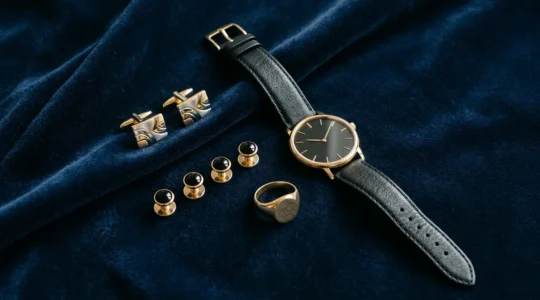
Studs, Cufflinks, and Watches: The Unspoken Rules of Black Tie Jewellery
Black tie jewellery is not about fashion; it’s a test of your understanding of etiquette, where the primary goal is to honour the occasion. Wearing a watch is traditionally discouraged as it implies you have somewhere better to be; a…
Lire la suite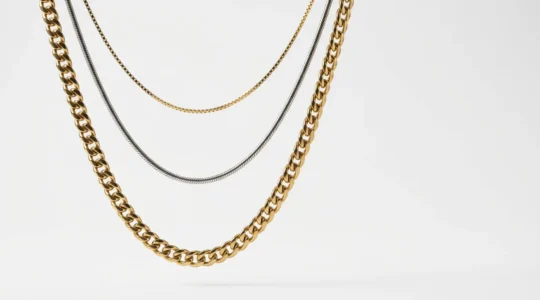
The Physics of Tangling: How to Layer Necklaces Without Them Knotting?
The secret to tangle-free necklaces isn’t luck or a single gadget; it’s mastering the basic physics of weight, friction, and kinetic energy. Heavier chains act as anchors, stabilizing lighter chains and resisting movement-induced knots. Friction is the enemy. It’s increased…
Lire la suite
Rent or Buy: Is Renting High Jewellery for a Wedding Worth the Insurance Risk?
Renting high jewellery for your wedding exposes you to significant financial liability that can exceed the item’s full retail price. Minor damage waivers are narrowly defined and contractually exclude common issues like cosmetic stains or damage to delicate materials like…
Lire la suite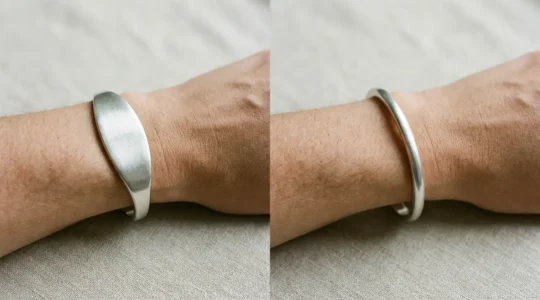
Oval vs Round Cuffs: Which Shape Stops the Bracelet Spinning on Your Wrist?
The persistent spinning of a cuff bracelet isn’t a sizing flaw; it’s an engineering mismatch between the jewelry’s shape and your wrist’s anatomy. A simple circumference measurement ignores the natural oval shape of your wrist, dictated by the ulna and…
Lire la suite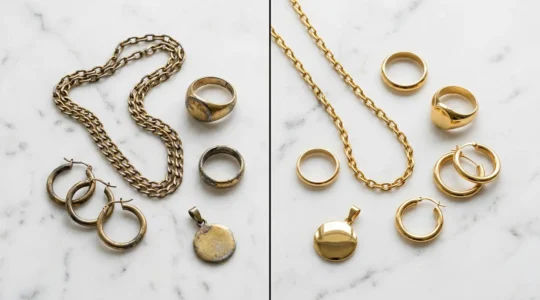
Demi-Fine vs Fine: Which Jewellery Trend Is Worth the Investment This Season?
The true cost of trendy demi-fine jewellery isn’t its price tag, but its rapid decline to zero value, making solid gold a smarter long-term financial choice. Gold vermeil often requires replacement within 6 to 18 months of regular wear, rapidly…
Lire la suite
Statement Jewellery in the City: What Is Acceptable in a Corporate Boardroom?
Contrary to the belief that corporate jewellery must be invisible, the key to executive presence is using it as a strategic tool for non-verbal communication. Sound and movement are as critical as appearance; your jewellery’s « auditory signature » can either build…
Lire la suite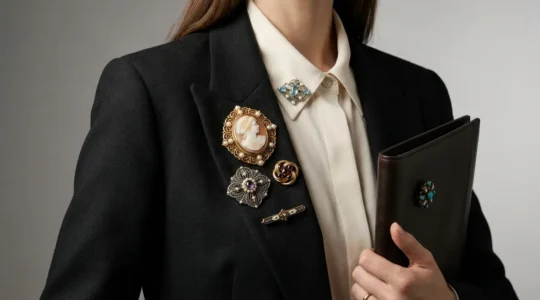
How to Style Victorian Brooches with Modern Office Wear?
That inherited Victorian brooch is more than just jewelry; it’s a piece of history resting in a velvet-lined box. It’s intricate, beautiful, and carries the weight of stories you can only imagine. Yet, for the modern professional woman, it also…
Lire la suite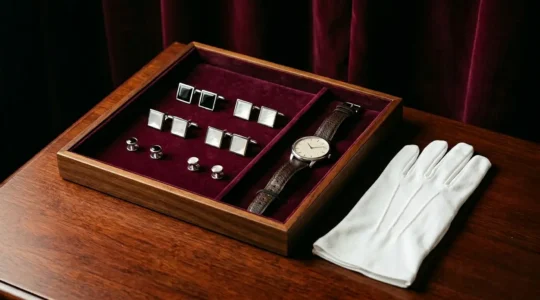
Black Tie Etiquette: Can You Wear a Watch to a Formal UK Gala?
Contrary to the rigid ‘no watch’ rule, true black tie etiquette is not about prohibition but about purpose. The key is understanding that your accessories, including a timepiece, should complement the event’s formality, not distract from it. This guide moves…
Lire la suite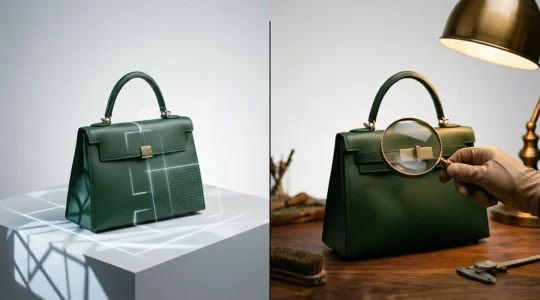
eBay Authenticity Guarantee vs Vestiaire: Which Is Safer for UK Buyers?
Relying solely on a platform’s « Authenticity Guarantee » is a critical mistake; true safety comes from understanding the system’s inherent flaws and how to protect yourself. AI and human authenticators can fail to detect high-end « super-fakes, » making a platform’s initial verdict…
Lire la suite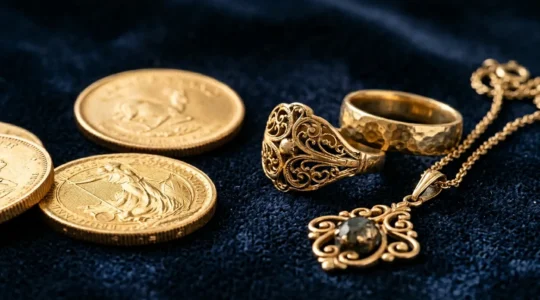
How Does the VAT Margin Scheme Impact Your Jewellery Investment Returns?
The single biggest error in jewellery investment is ignoring tax efficiency, which can erode over 30% of your capital before you even see a return. The 20% VAT on new jewellery is an immediate, non-recoverable loss, creating a significant value…
Lire la suite