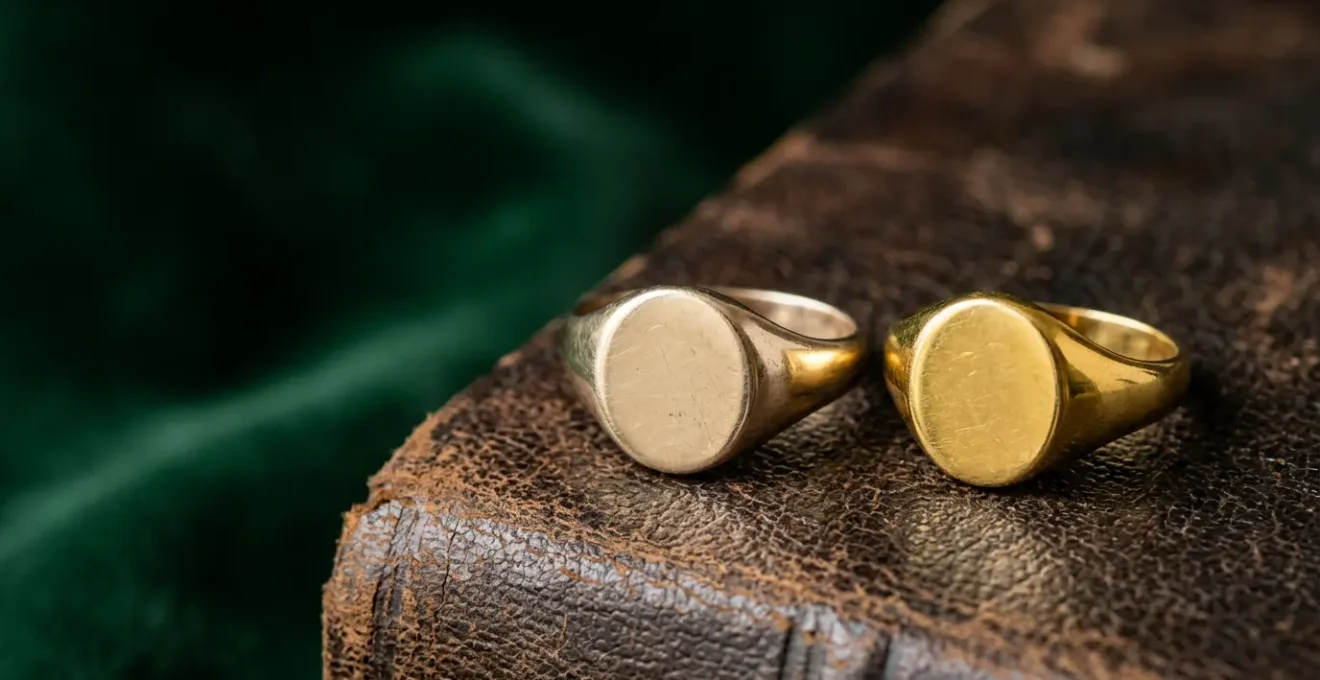
The British preference for 9ct gold isn’t a compromise on quality; it’s a deliberate choice for superior everyday durability and a more subtle, understated aesthetic.
- 9ct gold’s alloy composition makes it tougher and more resistant to the dents and deformations of daily life than softer, purer 18ct gold.
- Its paler, less “brassy” yellow hue is often considered more sophisticated and better suited to British sensibilities and lighting.
Recommendation: Judge gold by its ‘fitness for purpose’ for your lifestyle, not just by its carat number. The right choice is the one you can wear and enjoy without worry.
For an American expat arriving in the UK, the prominence of 9ct gold in every jeweller’s window can be perplexing. In a market where 14ct is the standard and 18ct is the benchmark for quality, the British love for what seems like a ‘lesser’ gold can be mistaken for a compromise on value. Many locals, too, find themselves weighing the perceived prestige of 18ct against the practicality of 9ct, often falling back on the simple idea that higher purity must be better.
The common wisdom revolves around a few key platitudes: 18ct gold is purer and has a richer colour, while 9ct is simply the more affordable, durable option. This simplifies the debate to a trade-off between luxury and budget. But this perspective misses the fundamental point, a principle deeply embedded in British craftsmanship: it’s not about choosing the richest material, but the *right* material for the job. The choice between 9ct and 18ct gold is a masterclass in material science and lifestyle, not just a reflection of price.
The real story lies in the nuances of their composition. It’s about understanding how the other metals in the alloy—the copper, silver, and zinc—are not merely diluting the gold but are in fact engineering a new material with its own distinct advantages. This article will deconstruct the myths and reveal why Britain’s love affair with 9ct gold is a savvy, practical choice rooted in a deep understanding of how jewellery is worn and lived in. We will explore the science behind durability, the truth about colour and tarnish, and the legal framework of hallmarking that guarantees quality on these shores.
To navigate this complex choice, this guide breaks down the key differences and practical considerations. The following sections will provide a clear, evidence-based comparison to help you understand which gold is truly the right fit for you and your lifestyle.
Summary: A Practical Comparison of 9ct and 18ct Gold
- Why 9ct Gold Is the Best Choice for Heavy Signet Rings?
- Yellow Gold Comparison: Can You See the Colour Difference Between 9ct and 18ct?
- Does 9ct Gold Tarnish? The Truth About Copper Content
- Why 9ct Gold Triggers Nickel Allergies More Than 18ct?
- Is 18ct Gold a Better Store of Wealth Than 9ct at Scrap Value?
- British Hallmarks vs Italian ‘750’ Stamps: Which Offers Better Purity Guarantees?
- Can You Mix 9ct and 18ct Gold When Melting Down for a New Ring?
- Why Is It So Difficult to Add Charms to a Platinum Bracelet?
Why 9ct Gold Is the Best Choice for Heavy Signet Rings?
When considering a piece of jewellery intended for a lifetime of daily wear, such as a heavy signet ring, the debate between 9ct and 18ct gold moves beyond purity and into the realm of practical physics. The common assumption is that “harder is better,” but the reality is more nuanced. While 18ct gold is technically a harder material, making it more resistant to surface scratches, 9ct gold is tougher and less malleable. This is what we call engineered durability.
This distinction is critical for a substantial piece like a signet ring. 18ct gold, being 75% pure gold, is softer and more prone to bending and denting upon impact. A sharp knock on a table could deform an 18ct ring’s shape. In contrast, 9ct gold, with its higher percentage of strengthening alloys like copper and silver, is more rigid. It may be slightly more prone to showing fine scratches over time, but it will staunchly resist the dents and deformations that can ruin the structure of a heavy ring. This makes it the superior choice for fitness for purpose in active, daily life.
The table below breaks down the key material properties that influence this choice. It highlights that while 18ct gold has superior pure gold content, 9ct gold’s composition makes it better suited to withstand the rigours of everyday wear and tear, especially in larger, more exposed pieces. As confirmed by a comparative analysis of gold properties, the trade-off is clear.
| Property | 9ct Gold | 18ct Gold |
|---|---|---|
| Pure Gold Content | 37.5% | 75% |
| Vickers Hardness (HV) | 80-120 | 135-165 |
| Resistance to Deformation | More brittle | More malleable |
| Long-term Durability | Good for lifetime | Superior for heirloom |
| Typical UK Price | £300-500 | £600-1000 |
Ultimately, for a signet ring that will be worn constantly, the ability to resist being bent out of shape is far more important than resisting a minor surface scratch. The choice for 9ct gold here is not about saving money; it’s a considered engineering decision to ensure the ring’s longevity and structural integrity.
Yellow Gold Comparison: Can You See the Colour Difference Between 9ct and 18ct?
One of the most immediate and debated differences between 9ct and 18ct gold is its colour. There is no denying that a perceptible difference exists. Because 18ct gold contains twice the amount of pure gold (75% vs. 37.5%), it naturally possesses a richer, deeper, and more intense yellow hue. 9ct gold, with its higher proportion of silver and copper alloys, presents a paler, more subtle yellow hue.
However, describing this difference as merely “better” or “worse” is a disservice to the aesthetic choice it represents. In the often soft, grey light of the UK, the intense yellow of 18ct gold can sometimes appear overly “brassy.” The gentler tone of 9ct gold is frequently seen as more understated and sophisticated, blending more seamlessly with a wider range of skin tones and clothing palettes. This preference for a less ostentatious look is a quintessentially British sensibility.
As the side-by-side comparison above illustrates, the difference is noticeable but not as stark as often described. The choice is less about inherent quality and more about personal taste and style. As jewellery expert Ruby McGonigle of Lebrusan Studio points out, it is a matter of metallic composition:
9ct gold is lighter, less yellow and less lustrous than its 18ct counterpart… the lower the gold content the more diluted the metal in hue.
– Ruby McGonigle, Lebrusan Studio – Ethical Jewellery Guide
For the discerning buyer, the question is not “which is more yellow?” but “which yellow suits me and my lifestyle?” The softer lustre of 9ct gold is often the preferred choice for those seeking classic, everyday elegance rather than a bold statement.
Does 9ct Gold Tarnish? The Truth About Copper Content
One of the most common concerns about 9ct gold is its potential to tarnish. This is a valid point, and the answer lies in its chemical composition. Gold itself is a noble metal and does not tarnish or corrode. However, the other metals in the alloy, particularly copper, can react with oxygen, sulfur, and moisture in the environment. Since 9ct gold contains a significant 62.5% of these other metals, it can, over time, develop a darker layer or patina.
This is especially noticeable in 9ct rose gold, which has an even higher copper content to achieve its pinkish hue. According to a case study by Fairina Cheng Jewellery, this tarnish is a known characteristic but is easily managed. Unlike the deep corrosion that can affect base metals, the patina on 9ct gold is a surface-level phenomenon. It’s not a sign of poor quality but a natural property of the alloy.
The good news is that maintaining the original lustre of 9ct gold is remarkably straightforward. For most owners, a simple, regular buffing with a soft, specialised jewellery cloth is enough to remove any discolouration and restore its shine. This simple maintenance routine is part of the “lifestyle” aspect of 9ct gold—it’s made to be worn, and with minimal care, it will last a lifetime. Taking a few preventative measures makes a significant difference.
Your Action Plan: Keeping 9ct Gold Lustrous in the UK
- Avoid Chemicals: Remove your 9ct gold jewellery before swimming in chlorinated leisure centre pools or using potent British household cleaners like Cillit Bang or Dettol.
- Store Properly: Keep pieces in a dry, airtight container or jewellery box, away from the high humidity of a bathroom, to minimise exposure to moisture.
- Regular Cleaning: Clean your jewellery monthly with a professional jewellery polishing cloth to gently remove any surface oxidation before it builds up.
- Check for Wear: When cleaning, inspect clasps and settings to ensure they remain secure. This is good practice for any piece of regularly worn jewellery.
- Professional Help: For a deeper clean or to remove significant tarnish, a professional re-polishing service at most UK jewellers costs between £25-£40 and will restore the piece to its original condition.
Ultimately, the tendency of 9ct gold to develop a patina is not a fatal flaw but a manageable characteristic. With simple, common-sense care, it can be kept looking as beautiful as the day it was bought.
Why 9ct Gold Triggers Nickel Allergies More Than 18ct?
For a segment of the population, the choice between 9ct and 18ct gold is dictated not by durability or colour, but by skin sensitivity. Nickel allergies are a common concern in jewellery, causing itchy, red rashes. The reason 9ct gold is more likely to trigger this reaction is a straightforward matter of percentages. Nickel is often used as a hardening and whitening alloy in gold jewellery.
The core issue is that the higher percentage of alloy metals in 9ct gold— 62.5% compared to just 25% in 18ct—means a greater chance of exposure to potential allergens like nickel if it is present in the mix. With 18ct gold, the piece is 75% pure, non-allergenic gold, significantly reducing the proportion of any allergenic metals. Therefore, individuals with a known nickel sensitivity are generally safer choosing 18ct gold or platinum.
However, it’s important to distinguish a true allergic reaction from the harmless discolouration that can sometimes occur. A faint greenish or black mark on the skin is typically an innocent chemical reaction between the copper in the alloy and the skin’s natural acids or lotions. This is not an allergy and washes off easily. A true nickel allergy will result in a persistent, itchy, and sometimes blistering rash.
Fortunately, the British jewellery industry is well aware of this issue. Due to regulations and consumer demand, many UK jewellers now offer nickel-free 9ct gold alloys. These pieces substitute palladium or zinc for nickel, providing the same durability without the risk of an allergic reaction. When purchasing, especially for someone with sensitive skin, it is crucial to ask the jeweller for confirmation that the piece is certified nickel-free. A hallmark only guarantees gold purity, not the specific composition of the other alloys.
Is 18ct Gold a Better Store of Wealth Than 9ct at Scrap Value?
When viewing jewellery as a financial asset, the conversation inevitably turns to its intrinsic or “scrap” value. In this specific context, the maths is simple and indisputable: 18ct gold holds significantly more value than 9ct gold. With exactly double the pure gold content (75% vs. 37.5%), an 18ct gold ring will always be worth twice as much as a 9ct gold ring of the exact same weight when melted down.
This is a critical consideration if your primary reason for buying is investment or to hold a tangible store of wealth. The scrap value is determined solely by the weight of the pure gold within the item, and all other alloys are disregarded. Therefore, for pure asset value, 18ct gold is the unequivocal winner. A bullion dealer doesn’t care about durability or colour; they care about the ‘Au’ content.
The following table, based on typical UK market rates, clearly illustrates this financial reality. For any given weight, the scrap value of an 18ct piece is double that of its 9ct counterpart.
| Ring Weight | 9ct Pure Gold Content | 18ct Pure Gold Content | 9ct Scrap Value* | 18ct Scrap Value* |
|---|---|---|---|---|
| 5g | 1.875g | 3.75g | £48 | £96 |
| 10g | 3.75g | 7.5g | £96 | £192 |
| 15g | 5.625g | 11.25g | £144 | £288 |
| *Based on 70% of London Bullion Market spot price, March 2024 | ||||
However, it is crucial to frame this correctly. Most people buy jewellery to be worn and enjoyed, not as a bar of gold to be stored in a vault. The purchase price of a finished piece of jewellery includes significant costs for craftsmanship, design, and retail markup, which are not recovered at scrap value. While 18ct gold is a better store of wealth, 9ct gold often represents better value for a wearable item, where the initial outlay is lower and the primary return is in daily enjoyment, not financial speculation.
British Hallmarks vs Italian ‘750’ Stamps: Which Offers Better Purity Guarantees?
In the global jewellery market, not all stamps are created equal. An Italian piece might bear a ‘750’ stamp, and a German piece a ‘375’, indicating the purity of the gold (75% and 37.5% respectively). These are fineness marks, a declaration by the manufacturer of the gold content. However, the system of hallmarking in the United Kingdom offers a far superior level of consumer protection.
A British hallmark is not a manufacturer’s claim; it is an independent, third-party verification. By law, any item sold in the UK as gold, silver, platinum, or palladium must be tested and stamped by one of the four official UK Assay Offices (in London, Birmingham, Sheffield, or Edinburgh). This process has been a cornerstone of British trade for over 700 years. The hallmark guarantees that the precious metal content meets a legal standard.
This means when you buy a hallmarked piece in the UK, you are not simply trusting the jeweller or the brand. You are trusting a centuries-old, legally mandated system of independent scrutiny. This provides an unparalleled guarantee of quality and purity. As the UK Assay Office itself states, it is the ultimate assurance for the consumer.
The UK Hallmark is the gold standard of consumer protection… a third-party, independent verification.
– UK Assay Office, British Hallmarking Council
So, while an Italian ‘750’ stamp is generally reliable, it lacks the unimpeachable, independent verification of a full British hallmark. The UK system is a guarantee not just of the metal’s purity, but of a tradition of trust and transparency that is respected worldwide. It is a mark of authenticity that adds inherent value to any piece of precious metal jewellery.
Can You Mix 9ct and 18ct Gold When Melting Down for a New Ring?
It’s a common and logical question from those looking to remodel old or inherited jewellery: can I combine my 9ct and 18ct pieces to create one new, substantial ring? While it sounds like a sensible way to recycle gold, from a professional and legal standpoint in the UK, the answer is a firm no. Attempting to melt 9ct and 18ct gold together creates a host of problems.
The primary issue is the creation of an unpredictable and non-standard alloy. Mixing equal weights of 9ct (37.5% gold) and 18ct (75% gold) does not result in a neat 13.5ct gold. The different melting points and compositions of the alloys (copper, silver, etc.) can lead to a poorly mixed, structurally unsound metal with inconsistent colour and properties. This new, mongrel alloy would have a gold content of approximately 56.25%.
As detailed in a case study from a professional Birmingham jeweller, Daniel Bentley, this creates an immediate hallmarking crisis. Under UK law, an item can only be hallmarked to the lowest standard of precious metal it contains. Since the resulting 13.5ct alloy (562.5 fineness) does not correspond to a legal UK standard (9ct/375, 14ct/585, 18ct/750, 22ct/916), it would have to be stamped as the next standard down, which is 9ct (375). In an instant, the higher value of the 18ct gold is legally and financially lost. No reputable jeweller in places like Hatton Garden or the Birmingham Jewellery Quarter would undertake such a process.
The correct and financially prudent approach is to treat the pieces separately. The professional process is clear:
- Take both the 9ct and 18ct pieces to a reputable bullion dealer or jeweller.
- Have each item weighed and valued separately based on its respective carat and the day’s gold price.
- Trade in both items for a total credit amount.
- Use this combined credit towards the purchase or creation of a new piece made from a single, standard carat of gold.
- Ensure the new, finished piece receives its own, correct UK hallmark.
This method ensures you receive the full, fair market value for both of your original pieces and end up with a new item that is structurally sound, beautifully consistent, and legally hallmarked.
Key Takeaways
- 9ct gold’s “engineered durability” makes it more resistant to dents and bending than softer 18ct gold, ideal for daily wear.
- The UK’s hallmarking system offers superior consumer protection, as it’s an independent, third-party guarantee of purity, unlike a manufacturer’s stamp.
- For investment purposes, 18ct gold holds double the intrinsic scrap value of 9ct gold due to its higher pure gold content.
Why Is It So Difficult to Add Charms to a Platinum Bracelet?
While this article has focused on the nuances of gold, it’s useful to contrast it with another popular precious metal: platinum. A common query jewellers receive is why it is so difficult and expensive to perform seemingly simple tasks like soldering a gold charm onto a platinum bracelet. The answer lies in fundamental chemistry and physics, specifically the vast difference in melting points.
Gold is a relatively workable metal, melting at 1,064°C. This allows jewellers to use standard torch equipment to solder, resize, and repair gold items with precision. Platinum, however, is a far more stubborn material. It boasts an incredibly high melting point of 1,768°C. This melting point difference of over 700°C means that the heat required to work with platinum is immense.
Attempting to solder a gold charm onto a platinum bracelet with a standard gold-working torch is impossible. The heat needed to melt the platinum solder would instantly vaporise the gold charm. To work on platinum, a jeweller needs a specialised, high-temperature torch (often using hydrogen gas) and a completely different set of skills and safety precautions. The process is more akin to high-precision welding than traditional soldering.
This is why such a job is often refused by jewellers who don’t specialise in platinum work, and why those who can do it charge a significant premium. It requires different tools, more time, and a higher level of expertise. It also highlights the unique properties of gold, whose relatively low melting point is a key factor in its millennia-long history as the jeweller’s metal of choice for intricate and creative designs. It is both precious and practical to work with.
Now that you have a comprehensive understanding of gold’s properties, the logical next step is to apply this knowledge. Evaluate your own lifestyle and preferences to determine which carat is the perfect fit for your next treasured piece.
Frequently Asked Questions About 9ct Gold
How can I tell if it’s a true nickel allergy?
A true nickel allergy causes a red, itchy, and sometimes blistering rash that appears within 12 to 48 hours of contact with the metal. This is a clear immune response. In contrast, the harmless green or black discolouration some people experience from copper oxidation is a simple chemical reaction that is not itchy and washes off the skin easily.
Are nickel-free 9ct gold options available in the UK?
Yes, absolutely. Responding to consumer needs and regulations, many UK jewellers now offer certified nickel-free 9ct gold. These alloys typically use palladium or zinc as the primary hardening agent instead of nickel. If you have sensitive skin, always ask your jeweller for a nickel-free certified piece.
Do UK hallmarks guarantee nickel-free status?
No, this is a common misconception. A UK hallmark is a legal guarantee of the precious metal’s purity—for example, the ‘375’ mark guarantees 37.5% pure gold. It does not provide information about the composition of the other 62.5% of the alloy. You must rely on the jeweller’s own certification for nickel-free assurance.