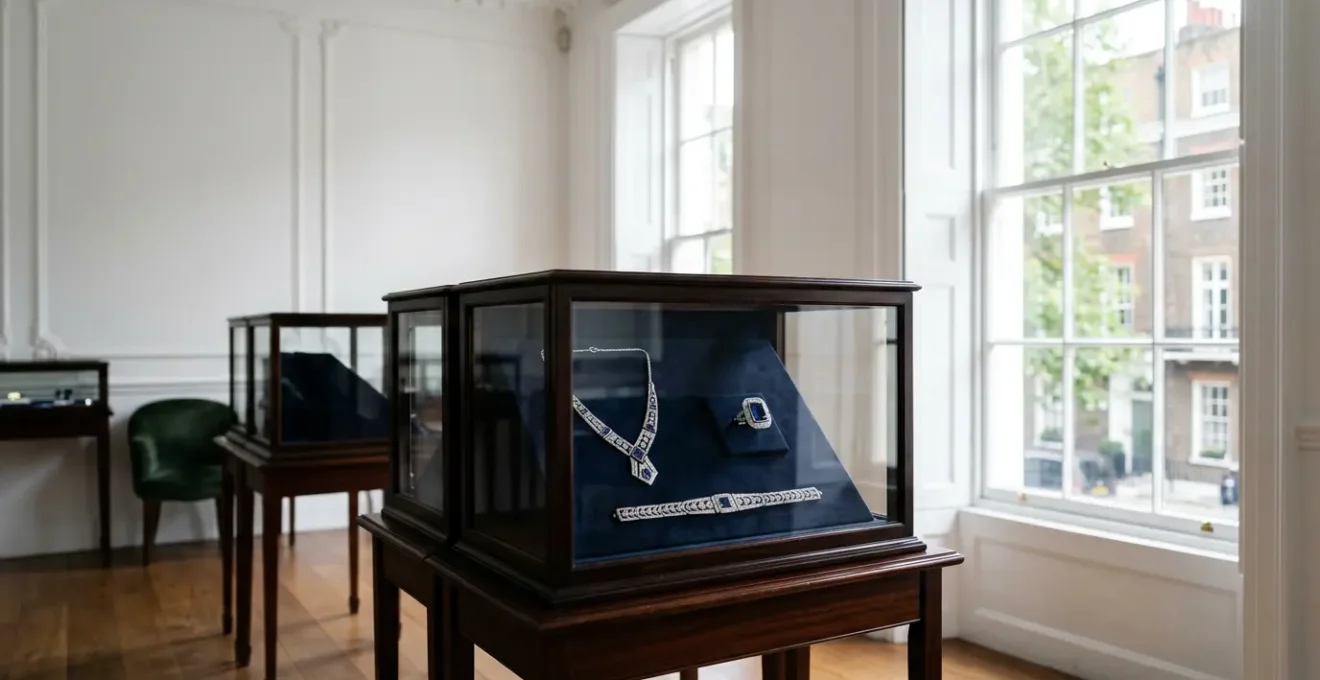
Art Deco jewellery’s superior resale value is driven by quantifiable factors of scarcity and superior engineering, not just aesthetics.
- Hand-fabricated construction using specific early platinum alloys creates a finite, high-quality supply that cannot be mass-replicated.
- Unique diamond cuts, such as the Old European, were designed for pre-electric lighting, offering a distinct ‘light performance’ that modern cuts lack.
Recommendation: For investment purposes, authenticity is paramount. Focus on pieces with verifiable provenance and intact original features like milgrain edging and calibre-cut settings.
An investor or a discerning collector browsing the UK’s vibrant vintage jewellery market will quickly notice a glaring price disparity. A platinum and diamond ring from the 1920s can command a price several times higher than a seemingly similar piece from the 1950s or 1970s. This isn’t an anomaly; it’s a consistent market reality. The common explanation often points to the glamour of the “Roaring Twenties” or the simple, elegant appeal of bold geometric designs. While true, these are surface-level observations that fail to satisfy a serious buyer’s core question: what are the fundamental, structural drivers behind this enduring value premium?
The answer lies far beyond subjective style preferences. The sustained outperformance of Art Deco pieces in the secondary market is a direct function of a unique and unrepeatable convergence of factors. This includes the material science of early platinum alloys, a philosophy of hand-fabrication that has all but vanished, and a design ethos that prioritised a specific type of light performance. These elements create an inherent scarcity and quality that modern manufacturing techniques, even with more advanced technology, struggle to replicate. For an investor, understanding these distinctions is the key to differentiating a mere fashion accessory from a tangible, appreciating asset.
This analysis will deconstruct the core pillars that support Art Deco’s premium valuation. We will move beyond aesthetics to explore the technical superiority of its materials, the tell-tale signs of authentic craftsmanship versus later reproductions, the unique optical properties of its gemstones, and the inherent risks that make intact pieces so rare. By examining these factors, we will build a clear, data-driven case for why this specific period of design continues to dominate the high-end vintage market.
To fully grasp the investment-grade qualities of this era, this article breaks down the key value drivers that distinguish genuine Art Deco jewellery. The following sections will provide a comprehensive analysis of its material, craftsmanship, and market position.
Contents: A Market Analyst’s Guide to Art Deco Value
- Why Is Art Deco Platinum Superior to Modern Alloys?
- How to Distinguish Real Art Deco from 1980s Reproductions?
- Old European Cut vs Modern Brilliant: Which Sparkles More in Candlelight?
- The Hidden Risk of Losing Tiny Calibre Cut Sapphires in Deco Rings
- Can You Re-apply Worn Milgrain Edging Without Ruining the Patina?
- How to Layer Art Deco Necklaces with a Modern T-Shirt?
- Titanium Art: Is It a Fad or the Future of High Jewellery?
- What Do Celtic Knots Actually Symbolize in Scottish Heritage Jewellery?
Why Is Art Deco Platinum Superior to Modern Alloys?
The term “platinum” can be misleading, as the properties of the metal have evolved significantly over the last century. For an investor, the distinction between Art Deco-era platinum and its modern counterpart is a critical value driver. The pieces created in the 1920s and 1930s predominantly used a platinum-iridium alloy, typically 90% platinum and 10% iridium. This specific formulation resulted in a metal that is significantly harder and denser than most modern platinum alloys, which often use cobalt (e.g., 95% platinum, 5% cobalt). This superior hardness is not just a technical footnote; it is the very reason why Art Deco filigree and milgrain details can be so exquisitely fine and have survived for a century. The metal could be worked into delicate, lace-like structures without sacrificing strength.
This inherent material integrity means that Art Deco pieces are more resistant to the minor scratches and dents that can soften the details of modern jewellery over time. Furthermore, vintage platinum develops a distinctive, sought-after patina—a soft, greyish lustre that is considered highly desirable by collectors and cannot be faked. This contrasts with the perpetually bright-white finish of modern rhodium-plated platinum. The combination of superior durability and desirable ageing characteristics makes original Art Deco platinum a fundamentally different and rarer material. In a thriving UK jewellery market that reached a value of £5.76 billion in 2024, this material distinction provides a solid foundation for long-term value retention.
The visual evidence of this superior craftsmanship is clear under magnification. The intricate hand-fabricated details were only possible due to the unique properties of this early alloy.
As the image demonstrates, the sharpness and complexity of the filigree work are a testament to the metal’s workability and the artisan’s skill. This level of detail, a hallmark of the era’s finite craftsmanship, is a key reason these pieces are considered wearable sculptures and command premium prices in the resale market. Modern casting methods using softer alloys cannot achieve this same level of crisp, airy definition.
How to Distinguish Real Art Deco from 1980s Reproductions?
The enduring popularity of Art Deco led to a major revival in the 1980s. While these reproductions can be attractive, they lack the historical and financial value of original pieces. For an investor, the ability to distinguish a 1920s original from a 1980s copy is paramount. The difference lies not in the design’s general shape but in the method of construction. Original Art Deco jewellery was painstakingly hand-fabricated. Artisans would draw the platinum into wires and roll it into plates, sawing, filing, and assembling each component by hand. This results in pieces that feel surprisingly lightweight, yet strong and crisp.
In contrast, 1980s reproductions were almost exclusively made using lost-wax casting. A wax model is created and encased in plaster, the wax is melted out, and molten metal is poured in. This process is faster and cheaper but results in heavier, softer-edged pieces. The crisp, sharp lines of a hand-sawn original are replaced by the slightly rounded, less defined edges of a cast piece. Furthermore, hallmarks can be a significant tell. Many original French pieces bear a tiny eagle’s head mark or sometimes no marks at all, whereas 1980s pieces made in the UK will almost certainly carry a full set of British hallmarks, including a date letter that clearly identifies the year of manufacture.
This comparative table, based on insights from market experts like those at Sotheby’s, breaks down the key diagnostic features for an investor.
| Feature | Original Art Deco (1920s-30s) | 1980s Reproductions |
|---|---|---|
| Construction | Hand-fabricated, lighter feel | Lost-wax casting, heavier weight |
| Edges | Crisp, sharp definition | Softer, less defined edges |
| Hallmarks | French eagle head or no marks | Full UK marks with date letter |
| Proportions | Delicate, elegant scale | Bolder, larger (‘power dressing’ influence) |
As an analysis of auction house data from sources like Sotheby’s consistently shows, the market places a significant premium on documented, hand-fabricated originals. To formalize this authentication process, an investor should follow a systematic approach.
Your Action Plan: 5 Steps to Authenticate Art Deco Jewellery
- Examine Hallmarks: Check for period-appropriate marks under a loupe. Look for small French assay marks (eagle’s head for platinum, owl for imported items) or an absence of marks, which was common. A full, modern hallmark set is a red flag for a reproduction.
- Assess the Weight: Handle the piece. A genuine hand-fabricated Art Deco item often feels surprisingly light for its size due to the hollow construction and precise use of metal. Cast reproductions will feel heavier and more solid.
- Inspect Edge Definition: Use a 10x jeweler’s loupe to look at the edges of the settings and filigree. Originals will have crisp, sharp angles from being hand-sawn and filed. Reproductions will display softer, more rounded edges characteristic of casting.
- Identify the Diamond Cuts: Scrutinize the main diamonds. Originals will almost always feature Old European, old mine, or rose cuts. The presence of modern round brilliant cuts often indicates a reproduction or a later replacement stone, which can impact value.
- Evaluate Overall Proportions: Look at the piece from a distance. Authentic Art Deco jewellery, despite its bold geometry, maintains a delicate and refined scale. 1980s reproductions often have a bolder, chunkier proportion reflecting the “power dressing” aesthetic of their era.
Old European Cut vs Modern Brilliant: Which Sparkles More in Candlelight?
A key element elevating Art Deco pieces beyond mere design is the unique light performance of their gemstones. The dominant diamond cut of the era was the Old European Cut. This is not simply an older version of the modern round brilliant; it was cut to entirely different mathematical proportions for a different world—a world lit by candles and gas lamps. The Old European Cut features a small table, a high crown, and a large, open culet. This configuration was masterfully designed to capture and return the warm, flickering light of an open flame, producing broad flashes of coloured fire (dispersion) and a dramatic on-off sparkle known as “scintillation.”
Modern round brilliant cuts, perfected in the mid-20th century, are engineered for the harsh, direct glare of electric lighting. They have larger tables, shallower crowns, and pointed culets, optimized to maximize white light return (brilliance). In candlelight, a modern brilliant can appear flat and lifeless, while an Old European cut comes alive with a mesmerizing, chunky sparkle. This unique interaction with low light is a significant part of the charm and value of Art Deco jewellery. It’s a performance that cannot be replicated by modern stones, making them highly prized by collectors who appreciate this nuanced aesthetic.
This difference in visual character is a core part of the collector’s experience, as experts in the field frequently note. As one specialist from the Valuable Antiques network explains:
The old European cut diamonds show that signature chunky sparkle that’s different from modern brilliant cuts. These hand-cut stones have more personality and fire under different lighting conditions.
– Valuable Antiques Expert, Vintage Art Deco Jewelry: Identification & Value Guide
This unique “personality” is a non-replicable feature that underpins the investment case. While modern diamonds are plentiful, the supply of high-quality, well-preserved Old European cut stones is finite. This scarcity, combined with their distinct aesthetic appeal, ensures they remain a strong asset class within the broader jewellery market.
The Hidden Risk of Losing Tiny Calibre Cut Sapphires in Deco Rings
Beyond the central gems, one of the most defining—and riskiest—features of high-end Art Deco jewellery is the use of calibre-cut stones. These are small sapphires, rubies, or emeralds meticulously custom-cut to fit perfectly into a channel or geometric pattern, often with no visible metal holding them in place. This technique allowed for seamless rivers of colour and sharp, graphic lines that are hallmarks of the style. However, the integrity of these settings represents a significant ‘structural premium’ for investors. Each tiny stone was individually shaped to fit its specific aperture, making it part of an intricate, irreplaceable puzzle.
The hidden risk lies in the fragility of these settings over a century of wear. The thin platinum walls holding the stones can wear down, and a single knock can cause a stone to fall out. Replacing a lost calibre-cut stone is not a simple matter of finding another small gem. A new stone must be custom-cut by a highly skilled lapidary to the exact, often irregular, dimensions of the original—a costly and time-consuming process that may never perfectly match the colour and cut of the remaining originals. Therefore, a piece with all its original calibre-cut stones intact is exponentially more valuable than one with replacements or empty channels.
This premium for intact, original pieces is consistently demonstrated at major auctions. For instance, a Seaman Schepps Art Deco bracelet with calibre-cut emeralds, estimated at $40,000-$60,000, sold for an astonishing $144,900 at Christie’s, largely because its complex and delicate settings were perfectly preserved. The market heavily penalizes damage and rewards originality.
The craftsmanship required to set and maintain these stones is immense, demanding a level of expertise found only in specialized restoration workshops.
An investor must therefore inspect any prospective piece with a loupe, paying close attention to the condition of these delicate channels. Any signs of repair, mismatched stones, or gaps in the pattern should be considered a significant detractor from the piece’s long-term investment potential. The perfection of the original structure is where the true value lies.
Can You Re-apply Worn Milgrain Edging Without Ruining the Patina?
Milgrain (or millegrain, from the French for “a thousand grains”) is the tiny, beaded detailing applied to the edges of platinum work, a signature flourish of the Art Deco and Edwardian periods. This delicate texture was applied by hand with a special knurling tool, adding a soft, glittering border that enhanced the brilliance of the nearby diamonds. For a collector, the state of the milgrain is a crucial indicator of a piece’s history and condition. Crisp, even milgrain signifies a well-preserved piece, while worn-down, smooth milgrain indicates a long life of wear. This “honest wear” can be charming, but it raises a critical question for investors: can it be restored?
The answer is complex. A master jeweller can re-apply milgrain to a worn edge. However, the process is fraught with risk to the piece’s most valuable attribute: its patina. The new milgrain will be bright and sharp, contrasting with the soft, warm grey lustre of the hundred-year-old platinum surrounding it. Furthermore, the process involves tools and sometimes heat that can disturb the original surface. Most purist collectors and top-tier auction houses prefer a piece with honestly worn original milgrain to one that has been heavily restored. A clumsy restoration can obliterate the subtle character that authenticates a piece’s age, effectively diminishing its market value.
The decision to restore should be weighed carefully. If the wear is so severe that it compromises the security of a stone, a minimal, expert-level intervention may be necessary. However, for purely aesthetic reasons, it is often wisest to preserve the piece’s history. This philosophy is echoed by the market’s consistent demand for authentic, well-preserved pieces. As Frank Everett, a senior figure at Sotheby’s, notes about the period’s lasting appeal:
Art Deco is one of the few periods that does not come in and out of fashion, frankly. It remains popular.
– Frank Everett, Vice Chairman for Jewelry at Sotheby’s
This enduring popularity means that the market for original, un-tampered-with pieces is robust. The subtle imperfections and signs of age are part of the story that investors are buying into. Ruining that story with an overly aggressive restoration can be a costly mistake.
Key Takeaways
- Material Scarcity: Art Deco’s value is rooted in the finite supply of pieces made with hard platinum-iridium alloys and hand-cut Old European diamonds.
- Craftsmanship Premium: Hand-fabrication, calibre-cut settings, and milgrain are difficult-to-replicate features that command a significant price premium when found in pristine, original condition.
- Authenticity is a Metric: The ability to distinguish originals from reproductions via construction, weight, and hallmarks is a critical investment skill, as the market heavily penalizes copies and alterations.
How to Layer Art Deco Necklaces with a Modern T-Shirt?
A significant factor in Art Deco’s sustained market dominance is its remarkable aesthetic portability. Unlike more culturally or historically specific styles, its clean lines and abstract geometric forms feel perpetually modern. This allows pieces to be effortlessly integrated into contemporary wardrobes, transcending their historical context and broadening their potential buyer base far beyond traditional antique collectors. The ability to style a 1920s sautoir necklace with a simple, modern t-shirt is a testament to this versatility and a key driver of its demand among fashion-conscious buyers.
Styling these pieces in a modern way is not about treating them as museum artifacts but as living components of a personal style. The key is to create a deliberate contrast between the vintage elegance of the jewellery and the casual nature of the clothing. A long chain with a geometric pendant, for example, can become the focal point of an outfit, drawing the eye and adding a layer of sophistication to an otherwise simple look. This contrasts with styles that are so ornate or period-specific that they can only be worn on formal occasions, limiting their utility and, by extension, their market appeal.
For those looking to integrate Art Deco necklaces into a modern wardrobe, the approach is about balance and layering:
- Select an Anchor Piece: Start with one significant Art Deco necklace, such as a long sautoir or a pendant with a strong geometric form. This will be the centrepiece of the look.
- Layer with Modern Chains: Add one or two shorter, simpler chains in a complementary metal. Mixing the vintage platinum with modern gold can create a chic, deliberate contrast.
- Balance the Look: If wearing a statement necklace combination, keep other jewellery minimal. A pair of simple stud earrings or a single Art Deco ring is sufficient.
– Mind the Neckline: The simplicity of a crew neck or V-neck t-shirt provides the perfect “canvas” to showcase the intricate layers of the necklaces without visual clutter.
This ease of wear ensures that Art Deco pieces are not just stored in a safe but are actively worn and enjoyed, maintaining their visibility and desirability in the market. This functional modernity is a powerful component of their investment thesis, ensuring they are sought after not just as collectibles, but as uniquely wearable assets.
Titanium Art: Is It a Fad or the Future of High Jewellery?
To fully appreciate the investment stability of Art Deco, it is useful to contrast it with contemporary movements in high jewellery, such as the rise of artistic titanium. Modern masters like JAR and Cindy Chao have gained acclaim for creating large, sculptural pieces from titanium, a metal prized for its strength, lightness, and ability to be anodized into vibrant colours. These pieces are undeniably works of art, but from an investment perspective, they operate on a completely different model than Art Deco. The value of a titanium piece is derived almost 100% from the artist’s name and the singularity of the design. The intrinsic value of the metal itself is negligible.
This places it in the realm of contemporary art investment: high-risk, high-reward, and heavily dependent on the artist’s continued critical acclaim. The supply is theoretically infinite, limited only by the artist’s output. In stark contrast, an Art Deco piece has a dual value proposition. It carries the value of its design and historical significance, but it is also underpinned by the high intrinsic worth of its component materials: platinum and old-cut diamonds. Its supply is finite and shrinking, as pieces are lost or damaged over time. This creates a stable floor for its value that is absent in material-agnostic art jewellery.
This table highlights the fundamental differences in their investment profiles:
| Factor | Art Deco Jewelry | Titanium Art Jewelry |
|---|---|---|
| Material Value | High intrinsic worth (platinum, gold, diamonds) | Negligible material value |
| Supply | Finite and shrinking | Theoretically infinite |
| Market Venues | Christie’s, Sotheby’s, Portobello Road | Contemporary galleries, Goldsmiths’ Fair |
| Price Appreciation | Consistent, documented growth | Highly variable, design-dependent |
| Buyer Demographics | Investment-minded collectors | Contemporary art collectors |
The global and consistent appeal of Art Deco is a point reinforced by market leaders. David Bennett, a Chairman at Sotheby’s International Jewellery Division, states, “There are exquisite Cartier pieces from the Art Deco era – a period which we have seen time and again holds special appeal for collectors from New York to Paris to Shanghai.” This highlights a broad, established global market that is less susceptible to the whims of the contemporary art scene. While titanium jewellery represents an exciting frontier of design, for an investor seeking stable, long-term appreciation, Art Deco’s foundation in finite supply and intrinsic material worth presents a far more proven and predictable asset class.
What Do Celtic Knots Actually Symbolize in Scottish Heritage Jewellery?
The final element that solidifies Art Deco’s superior market position is its universal aesthetic language. To understand this, we can contrast it with another beautiful but more niche category: heritage jewellery, such as pieces featuring Scottish Celtic knots. Celtic knotwork, with its intricate, endless loops, carries deep cultural and historical symbolism. These knots often represent concepts like eternity, loyalty, faith, and the interconnectedness of life, making them profoundly meaningful within their cultural context. For someone with Scottish heritage or a connection to Celtic culture, a piece of knotwork jewellery is a powerful personal statement.
However, this very specificity is what limits its global resale value compared to Art Deco. The symbolism of a Trinity Knot or a Dara Knot is not universally understood. Its appeal is potent but concentrated within a specific demographic. An investor in London might appreciate its beauty, but a buyer in Shanghai or Dubai may not share the cultural resonance, viewing it simply as a decorative pattern. This cultural barrier narrows the potential market and puts a ceiling on its price appreciation in global auction settings.
Art Deco, on the other hand, speaks a language of pure form: geometry, symmetry, and bold contrast. Its inspiration was drawn from a global fusion of influences—Egyptian, Asian, and industrial—but abstracted into a style that is culturally neutral. A chevron pattern or a stepped ziggurat form requires no special knowledge to be appreciated. This “aesthetic portability” gives it a vast, international pool of potential buyers who are all competing for the same finite supply of authentic pieces. The record-breaking prices for Art Deco creations, like a Cartier ‘Tutti Frutti’ bracelet selling for $1.3 million in an online auction, are driven by this fierce global demand. As one expert at Chiswick Auctions recognises, “Cartier’s Art Deco creations rank among the best out there for sheer imagination.” It is this universally understood imagination that gives it a decisive edge over more culturally-bound designs.
While heritage jewellery like Celtic pieces holds immense cultural and personal value, the Art Deco style’s abstract, global language provides it with a far larger and more competitive market, directly fuelling its superior performance as a tangible investment asset. To apply this knowledge effectively, the next logical step for a prospective buyer is to seek professional valuation to confirm the authenticity and condition of a potential acquisition, ensuring it meets the criteria for a sound investment.