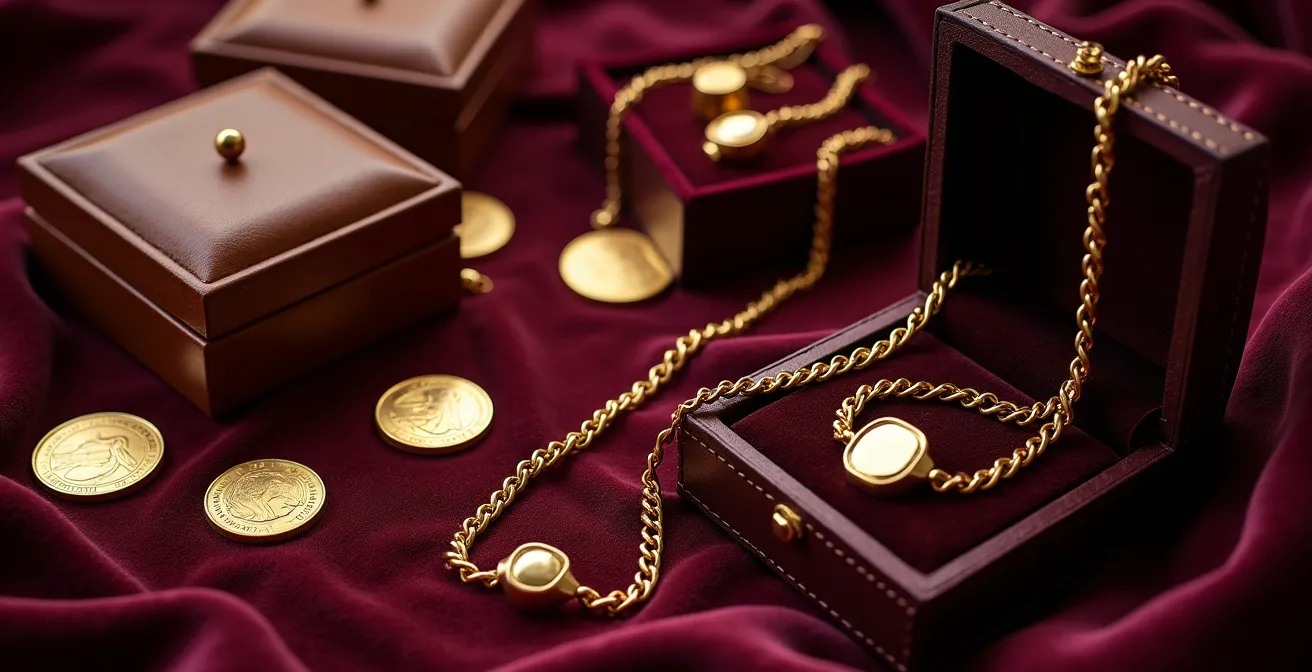
Successful jewellery investment in the UK is less about fleeting aesthetics and more about mastering the financial mechanics of the secondary market.
- Leverage UK-specific tax advantages, such as the complete Capital Gains Tax (CGT) exemption on Sovereign and Britannia gold coins.
- Prioritise assets with high “secondary market velocity,” like round brilliant diamonds and signed heritage pieces, over those susceptible to fashion trends.
Recommendation: Base investment decisions on the potential net return after rigorously accounting for VAT, dealer premiums, and auction house fees.
For the prudent British investor watching the FTSE 100’s volatility, diversifying into tangible assets is a logical step. Jewellery, often viewed through a lens of sentimentality, presents itself as a compelling hedge against inflation and economic uncertainty. The common advice is predictable: buy gold, seek out pieces from iconic houses like Cartier or Van Cleef & Arpels, and focus on rarity. While not incorrect, this surface-level guidance barely scratches the surface of what constitutes a sound investment strategy within the unique financial landscape of the United Kingdom.
These platitudes fail to address the critical questions a serious investor must ask. They overlook the structural nuances that can either amplify returns or erode capital. The true key to leveraging jewellery as an asset class is not simply identifying beautiful objects, but in understanding and exploiting the underlying financial mechanics of the market. It’s about grasping the profound impact of the VAT Margin Scheme, navigating the liquidity traps of the diamond market, and strategically utilising UK-specific tax exemptions.
But what if the real determinant of value retention wasn’t the carat weight, but the asset’s tax efficiency? What if the most significant risk wasn’t market fluctuation, but an inability to liquidate the asset at a fair price? This guide moves beyond the basics to provide an analytical framework for the UK investor. We will dissect why certain pieces appreciate, how to value them correctly for insurance, the critical differences in gold forms, the costly mistakes to avoid, and the fiscal regulations that fundamentally shape your net return.
This article provides an in-depth analysis of the key factors that determine the investment potential of jewellery in the UK market. Explore the following sections to build a robust strategy for your tangible asset portfolio.
Summary: Jewellery Investment Strategy in the UK Market
- Why Do Limited Run Pieces Surge in Value After Discontinuation?
- How to Value Investment Jewellery for Insurance Purposes in the UK?
- Sovereign Coins or Heavy Chains: Which Gold Form Has Lower Premiums?
- The Liquidity Mistake That Leaves Investors Stuck with Unsellable Diamonds
- When Is the Best Month to Sell Gold Jewellery for Maximum Cash Return?
- Why 95% of Sapphires on the Market Are Heat Treated?
- Titanium Art: Is It a Fad or the Future of High Jewellery?
- How Does the VAT Margin Scheme Impact Your Jewellery Investment Returns?
Why Do Limited Run Pieces Surge in Value After Discontinuation?
The value appreciation of limited run or discontinued jewellery is not a matter of sentiment but of fundamental economics: enforced scarcity. When a luxury house like Cartier or Patek Philippe ceases production of a specific model, the supply becomes permanently fixed. As brand heritage grows and new collectors enter the market, demand for these finite pieces steadily increases, creating a powerful upward pressure on price. This is particularly potent for pieces that defined an era or represented a design breakthrough, as they transition from being mere accessories to becoming historical artefacts. The value is no longer tied to the raw materials but to its provenance and iconic status.
This principle of “manufactured rarity” is a deliberate strategy employed by top-tier brands to protect their long-term value. Unlike mass-produced items, the finite number of these pieces ensures they are insulated from the depreciation that affects common jewellery. For the UK investor, this creates an opportunity to acquire assets whose value is driven by collectability rather than just the fluctuating spot price of precious metals. The key is to identify pieces that have both a strong brand signature and a documented production limit or a confirmed discontinuation date, transforming them into a tangible asset with a built-in catalyst for appreciation.
The Cartier Juste un Clou Investment Journey
Among the most recognisable pieces of jewellery in the world, the Cartier Juste un Clou bracelet was designed in 1971 to translate a simple household object – the nail – into a thing of beauty. This iconic piece has seen consistent value appreciation on the UK secondary market, with pre-owned models from the 1970s commanding premiums well above their original retail prices. Its distinct design and association with a specific cultural era have cemented its status as a collector’s item, demonstrating how discontinued or vintage signed pieces can function as high-growth tangible assets.
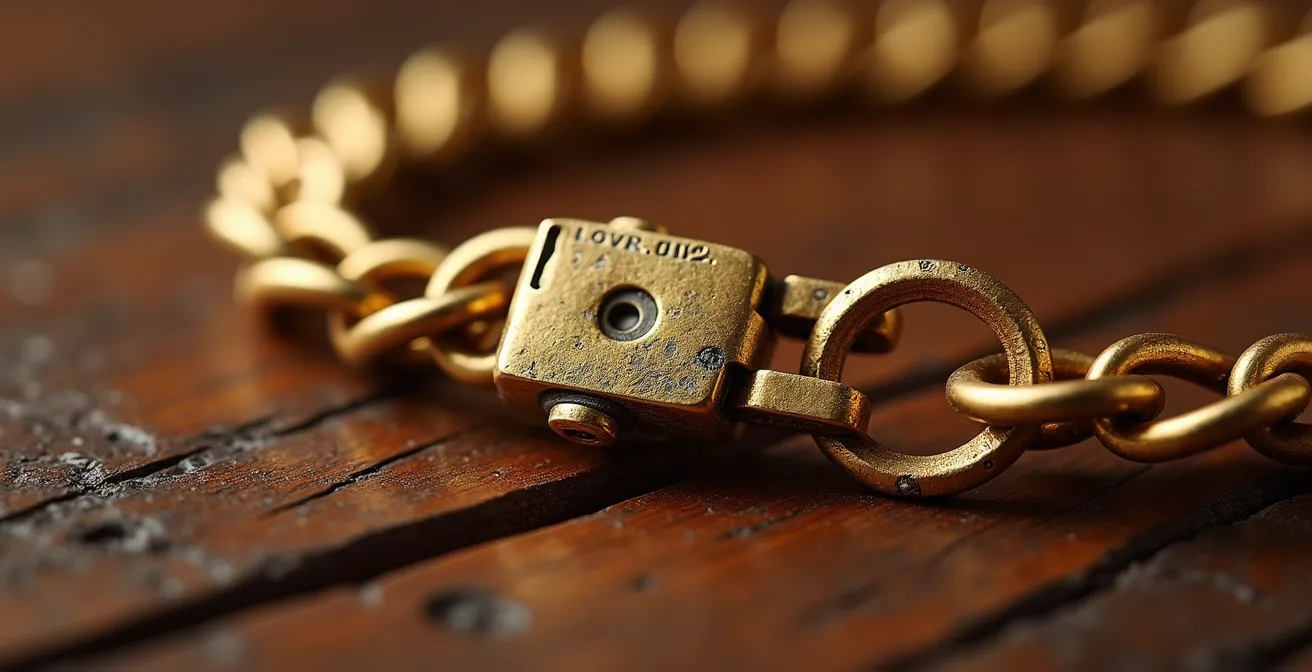
The visual evidence of patina and unique hallmarks on a vintage piece are not flaws; they are part of its story and a certificate of its authenticity and age. These details are what collectors on the secondary market actively seek, as they differentiate a genuine period piece from a modern reproduction. Understanding this allows an investor to see value where a casual observer might see wear, a crucial perspective in the world of collectable jewellery.
How to Value Investment Jewellery for Insurance Purposes in the UK?
Properly valuing your jewellery for insurance is a critical aspect of asset protection, yet it is frequently misunderstood. The valuation is not merely a statement of what you paid; it is a formal assessment required by insurers to provide adequate cover. In the UK, the most credible valuations come from valuers registered with the National Association of Jewellers (NAJ). Their reports are the industry standard and are essential for securing an “Agreed Value” policy, which is paramount for investment-grade pieces. An Agreed Value policy locks in a settlement amount at the start, protecting you from disputes over market depreciation or an insurer’s attempt to offer a lower-quality replacement.
Many policyholders make the mistake of accepting a “New Replacement Value” (NRV). While this figure often appears higher and more impressive, it reflects the cost of buying a brand-new equivalent item from a retail store today. This can lead to inflated premiums and doesn’t reflect the true secondary market value of your specific piece, especially if it’s vintage or pre-owned. For an investor, the goal is to insure the piece for its realistic, fair market price, which is best captured by an Agreed Value. Furthermore, it is crucial to individually list, or “schedule,” any single item valued above the policy’s standard limit, typically between £1,500 and £2,500, to ensure it is fully covered.
The following table breaks down the key differences between the common valuation types you will encounter when discussing insurance policies in the UK.
| Value Type | Definition | Impact on Premium | Actual Payout Risk |
|---|---|---|---|
| New Replacement Value | Cost to buy new equivalent today | Highest premiums | May exceed actual market value |
| Agreed Value | Pre-negotiated settlement amount | Moderate premiums | Guaranteed payout amount |
| Market Value | Current second-hand selling price | Lowest premiums | May not cover replacement |
Your Action Plan: Securing an Accurate UK Jewellery Insurance Valuation
- Obtain a valuation from a National Association of Jewellers (NAJ) registered valuer for insurer acceptance.
- Document provenance with original receipts, certificates, and any service history from UK dealers.
- Negotiate an ‘Agreed Value’ policy with your insurer instead of accepting inflated ‘New Replacement Value’ quotes.
- Schedule any individual pieces valued above your home insurance’s single-item threshold (typically £1,500-£2,500).
- Update your valuations at least every two years to reflect current market values and avoid the risk of underinsurance.
Sovereign Coins or Heavy Chains: Which Gold Form Has Lower Premiums?
When investing in physical gold, the form of the asset directly impacts its total cost and tax implications. A heavy gold chain and a pile of Gold Sovereigns of the same weight have vastly different investment profiles. Jewellery, such as a chain, carries a significant premium over the spot price of gold. This is due to the costs of design, craftsmanship, branding, and retail markup. While it can be worn and enjoyed, from a purely financial standpoint, you are paying for more than just the metal. Upon liquidation, you are unlikely to recover these additional costs, meaning the gold price must appreciate substantially just for you to break even.
In contrast, bullion coins like the UK Gold Sovereign or Britannia are designed specifically for investment. Their premiums over the spot price are significantly lower as they are tied to minting and distribution costs, not artistic labour. More importantly, they offer a powerful, UK-specific financial advantage. As confirmed by The Royal Mint’s official tax guidance, all gold Sovereigns and Britannia coins are completely CGT-exempt for UK investors. This means you can realise unlimited tax-free profits, a benefit that does not apply to gold jewellery. For an investor focused on net returns, the choice is clear: bullion coins offer superior liquidity, lower entry costs, and unparalleled tax efficiency.
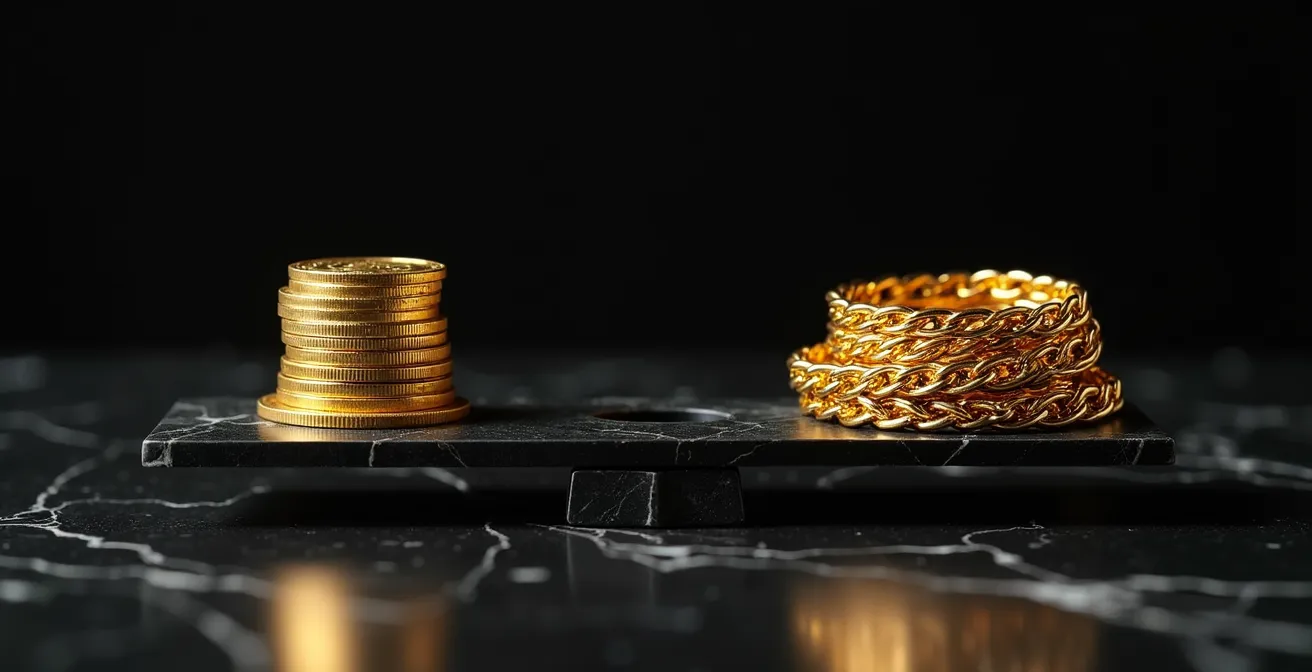
This fundamental difference in financial structure is why seasoned investors often separate their wearable collection from their investment portfolio. As Robert Cuomo, Managing Director at Hatton Jewellers, notes, gold’s reliability as an investment is a key consideration:
“When compared to other popular long-term investments, gold has long been considered a reliable option, primarily because the price of gold rarely decreases and is known to increase in times of economic hardship — unlike most other investments”
– Robert Cuomo, Managing Director at Hatton Jewellers
The Liquidity Mistake That Leaves Investors Stuck with Unsellable Diamonds
In the world of diamond investment, the single most costly mistake is to confuse paper certification with real-world liquidity. An investor can hold a GIA-certified, D-colour, Flawless diamond that is virtually unsellable on the secondary market if it’s in an undesirable shape. The market has a clear and enduring preference for the round brilliant cut. This is not a matter of taste but of market mechanics; their superior light performance and timeless appeal ensure consistent demand. In contrast, “fancy” shapes like marquise, pear, or heart cuts are highly susceptible to the whims of fashion. A shape that is popular today can become obsolete tomorrow, leaving the investor with an asset that dealers will only buy at a steep discount.
The numbers are stark. Within the UK’s secondary market, round brilliant cuts consistently demonstrate superior liquidity. This “secondary market velocity” means they can be sold more quickly and for a price closer to their appraised value. This is a critical factor often overlooked by novice investors captivated by the uniqueness of a fancy shape. Answering the question “how quickly can I convert this asset to cash without a significant loss?” is more important than the specifications on the certificate. Indeed, many UK dealers are skeptical of GIA reports from before 2010, often insisting on costly recertification, and mentally deduct potential recutting costs from their offers for older or poorly proportioned stones.
Furthermore, hidden costs like the 10-15% seller’s premiums plus VAT charged by UK auction houses can severely erode net returns. A prudent investor must prioritise market demand and liquidity over personal preference, recognising that in this asset class, conformity often yields a higher return than uniqueness.
The Secondary Market Reality for UK Diamond Shapes
Analysis of the UK diamond trade reveals a clear hierarchy of liquidity. While rarity drives the value of assets like natural pearls, where just 1 in 10,000 natural oysters yield a gem-quality pearl, the diamond market is driven by demand and standardisation. Round brilliant cuts maintain significantly better liquidity than fancy shapes like marquise or pear cuts, which are highly susceptible to changes in fashion trends. An investor holding a pear-shaped diamond from the 1980s may find it difficult to sell without accepting a major discount, whereas a round brilliant of the same quality would find ready buyers.
When Is the Best Month to Sell Gold Jewellery for Maximum Cash Return?
Timing the sale of gold jewellery is a strategic decision that can impact your net return by a significant margin. The value is influenced not only by the daily spot price of gold but also by seasonal demand cycles within the UK market. Attempting to sell in January or February is often a mistake. This period sees a flood of unwanted Christmas gifts and personal items being sold for cash, creating an oversupply. With more sellers than buyers, dealers and pawnbrokers have the upper hand and typically lower their offer prices, sometimes by as much as 5-7%.
Conversely, the period from October to early November presents a prime selling window. Dealers are actively stocking up in anticipation of two major retail events: Christmas and Diwali. This heightened demand for inventory means they are often willing to pay a premium of 3-5% to secure quality pieces. This seasonal arbitrage provides a predictable opportunity for a savvy seller to maximise their return. Beyond seasonal trends, the most potent factor is currency fluctuation. During periods of Sterling (GBP) weakness against the US Dollar (in which gold is priced), the value of gold in GBP terms increases. Selling during these periods can amplify returns significantly, sometimes by 5-15%, making macroeconomic awareness a crucial tool for the jewellery investor.
The following calendar provides a strategic overview of the UK gold selling market’s dynamics, helping you to plan your liquidation for optimal results.
| Period | Market Condition | Price Impact | Recommendation |
|---|---|---|---|
| Oct-Nov | Pre-Christmas/Diwali demand surge | +3-5% dealer prices | Good selling window |
| Jan-Feb | Post-holiday sell-off flood | -5-7% dealer offers | Avoid selling |
| Late March | UK tax year end | Neutral to positive | Strategic CGT planning |
| GBP weakness periods | Currency depreciation | +5-15% in GBP terms | Optimal selling time |
Why 95% of Sapphires on the Market Are Heat Treated?
The vast majority of sapphires available on the market, including those in high-end jewellery, have undergone heat treatment. This is a standard and accepted industry practice used to improve a stone’s colour and clarity. The process involves heating the corundum to high temperatures, which can dissolve silk-like inclusions and deepen a pale stone into a rich, velvety blue. This treatment makes beautiful sapphires more accessible and affordable. However, from an investment perspective, this widespread practice creates a clear division in the market: treated versus untreated. While a treated sapphire can be a beautiful part of a personal collection, its investment potential is severely limited.
The true investment-grade sapphires are those that are certified as “no heat” or unheated. These stones are exceptionally rare, as they possess exceptional colour and clarity naturally, without any human intervention. This natural rarity is the primary driver of their value. According to UK luxury jewellery market analysis, unheated sapphires command 200-400% premiums over identical heated stones of the same size and quality. For a UK investor, this distinction is everything. Any significant investment in a sapphire must be accompanied by a certificate from a top-tier gemological laboratory, such as SSEF or Gübelin in Switzerland. The UK market places its trust almost exclusively in these Swiss labs to verify a claim of “no heat.” An uncertified stone, or one with a report from a less reputable lab, should be considered treated and valued accordingly.
An investor must be vigilant. The certificate must explicitly state “No indications of heating.” The absence of a comment on treatment is not a confirmation of its natural state. Furthermore, one must be wary of stones with treatments like glass filling or beryllium diffusion, which are used to mask significant flaws and have absolutely zero investment value. These treatments render a stone virtually worthless on the secondary market. Therefore, the foundation of any sapphire investment is unimpeachable certification confirming its natural, untreated state.
Titanium Art: Is It a Fad or the Future of High Jewellery?
Titanium, a metal more commonly associated with aerospace engineering than with high jewellery, has emerged as a serious material for investment-grade pieces. Its journey from industrial application to the showcases of Place Vendôme has been driven by a handful of visionary designers. The metal’s unique properties—its incredible strength, light weight, and ability to be anodized into a spectrum of vibrant colours—allow for the creation of large, voluminous designs that would be impractically heavy if made from gold or platinum. This has opened up new creative possibilities, transforming pieces into wearable sculptures.
The key to titanium’s legitimacy as an investment material lies in its adoption by master jewellers. Foremost among them is Joel Arthur Rosenthal (JAR), whose pioneering work has single-handedly elevated the metal’s status. His intricate, one-of-a-kind creations are highly sought after by the world’s most sophisticated collectors. When these pieces appear at auction, they consistently shatter estimates, proving that the value is derived not from the intrinsic worth of the material but from the artist’s genius and the object’s rarity. This is the hallmark of a true art-based asset.
This market performance provides a crucial precedent for investors. As a recent review of major sales confirms, the right artist can turn this modern metal into a significant store of value.
Joel Arthur Rosenthal’s pioneering use of titanium has legitimised it as a high-jewellery material, with JAR pieces achieving record prices at London auctions and setting precedents for titanium’s investment potential
– London Auction Market Analysis, Christie’s and Sotheby’s London Sales Review 2024
For the UK investor, this signifies a shift. While gold remains the bedrock of a tangible asset portfolio, high jewellery in materials like titanium represents a growth category. The investment here is not in the metal itself, but in the provenance, artistry, and certified rarity of a piece by a market-proven master. It is an investment in art, which happens to be wearable.
Key Takeaways
- Tax Efficiency is Paramount: Your net return is fundamentally shaped by UK tax law. Prioritising CGT-exempt assets like Sovereign coins and leveraging the VAT Margin Scheme on pre-owned items are non-negotiable strategies.
- Liquidity Outweighs Rarity: An asset is only valuable if it can be sold. The consistent demand for round brilliant diamonds and signed heritage pieces provides a level of liquidity that niche or fashion-driven items cannot match.
- Documentation is Value: Provenance is not a backstory; it is a critical component of an asset’s worth. Original receipts, service history, and top-tier gemological certificates (e.g., SSEF, Gübelin) are essential for realising an item’s maximum value.
How Does the VAT Margin Scheme Impact Your Jewellery Investment Returns?
Understanding Value Added Tax (VAT) is arguably the single most important financial consideration for a UK jewellery investor. When purchasing a new piece of jewellery made from platinum, palladium, or even silver, you instantly pay a 20% VAT on the full retail price. This is an immediate and irrecoverable loss. If you buy a new platinum ring for £10,000 + VAT (£2,000), its total cost is £12,000. The moment you leave the shop, its resale value on the secondary market is closer to £10,000, assuming no other depreciation. You must see a 20% appreciation in the asset’s value just to break even.
This is where two crucial UK-specific mechanisms come into play. Firstly, investment-grade gold (bullion) is VAT-exempt, a significant advantage highlighted by UK tax specialists who note its attractiveness for investment. Secondly, for pre-owned jewellery, dealers can use the VAT Margin Scheme. Under this scheme, VAT is not charged on the full selling price but only on the dealer’s profit margin. For a £10,000 pre-owned watch where the dealer’s margin is £2,000, the VAT would be calculated on that £2,000 (amounting to £400), not the full £10,000. This dramatically reduces the tax burden and the initial “loss” upon purchase, making pre-owned items from reputable dealers a vastly more efficient vehicle for investment.

The table below illustrates the stark reality of how VAT treatment affects your initial investment and potential returns.
| Purchase Type | £10,000 Item Cost | VAT Treatment | Total Price | Resale Impact |
|---|---|---|---|---|
| New Jewelry (Standard VAT) | £10,000 | 20% on full price | £12,000 | Lose £2,000 instantly |
| Pre-Owned (Margin Scheme) | £10,000 | VAT on dealer margin only | ~£10,400 | Minimal immediate loss |
| Gold Sovereigns | £10,000 | VAT exempt | £10,000 | No VAT loss |
By applying this analytical framework—focusing on tax efficiency, market liquidity, and certified provenance—you can navigate the UK jewellery market not as a consumer, but as a strategic investor, effectively diversifying your portfolio with assets that offer both beauty and a robust defence against economic instability. The next logical step is to assess your own portfolio against these principles.