Vintage and Antique Jewelry
Whether you have inherited a grandmother’s engagement ring, spotted an intriguing brooch at a country auction, or simply find yourself drawn to the romance of pieces crafted by hands long stilled, vintage and antique jewellery offers something modern production simply cannot replicate. Each piece carries its own biography—decades of wear, shifts in fashion, stories whispered through hallmarks and clasps.
Yet this world can feel intimidating. How do you know whether a piece is genuinely Victorian or a clever reproduction? What hidden costs lurk behind that winning auction bid? And when HMRC asks for a valuation of inherited jewellery, which figure should you provide? These questions matter whether you are a first-time inheritor, a budding collector, or someone considering vintage pieces as an alternative to high-street purchases.
This resource brings together the essential knowledge you need to navigate vintage and antique jewellery with confidence. From understanding tax implications to spotting the telltale signs of authentic Art Deco craftsmanship, each section below introduces a core theme—and points toward more detailed guidance when you wish to delve deeper.
What Distinguishes Vintage From Antique Jewellery?
The terms are often used interchangeably, but they carry specific meanings within the trade. Antique jewellery generally refers to pieces over one hundred years old, whilst vintage jewellery describes items typically between twenty and one hundred years of age. A brooch from the Edwardian era qualifies as antique; a cocktail ring from the late Art Deco period now edges into the same territory.
Why does this distinction matter? Primarily for value and expectation. Antique pieces often command premiums due to rarity and historical significance, but they may also require more careful handling and specialist restoration. Vintage items, meanwhile, can offer exceptional craftsmanship at more accessible price points—particularly pieces from the mid-twentieth century that have not yet attracted widespread collector attention.
Understanding where a piece sits on this timeline also helps you ask the right questions. A ring described as antique should show appropriate hallmarks, construction techniques, and wear patterns consistent with its claimed age. When these elements conflict, you may be looking at a later reproduction or, worse, a so-called marriage piece assembled from mismatched components.
Valuing and Managing Inherited Jewellery
Inheriting jewellery brings both emotional weight and practical obligations. In the UK, pieces forming part of an estate may be subject to inheritance tax, and HMRC expects accurate valuations. Underestimate, and you risk investigation; overestimate, and the estate pays more tax than necessary.
Why Professional Valuation Protects You
Attempting to value heirloom pieces yourself—perhaps using online comparisons or high-street estimates—can trigger scrutiny if HMRC considers the figures inconsistent with market reality. A qualified valuer registered with a professional body provides documentation that stands up to examination. Expect to pay between £50 and £150 for a formal written valuation, depending on the number of pieces.
Probate Value Versus Insurance Value
These two figures serve different purposes and should never be confused. Probate value represents what an item would realistically fetch if sold, typically at auction. Insurance value reflects replacement cost, often significantly higher because it accounts for retail markup and the difficulty of finding an identical piece. Submitting insurance values for probate purposes inflates the estate and increases tax liability unnecessarily.
Dividing a Collection Without Conflict
When multiple beneficiaries have claims on a jewellery collection, disputes can fracture families. Practical approaches include:
- Obtaining independent valuations before any discussion of distribution
- Creating lots of roughly equal value rather than assigning individual pieces
- Using a sealed-bid system where sentimental attachment outweighs monetary worth
- Considering professional mediation for collections of significant value
Remember that selling inherited pieces within twelve months may trigger capital gains tax if the sale price exceeds the probate value by more than the annual exemption threshold.
Where to Buy: UK Auctions Versus Dealers
Both routes offer access to genuine vintage and antique pieces, but the buying experience differs substantially. Understanding these differences helps you choose the right approach for your circumstances and risk tolerance.
The True Cost of Auction Buying
That winning bid of £500 rarely represents your final outlay. UK auction houses charge buyer’s premiums typically ranging from 20% to 28%, plus VAT on the premium itself. A £500 hammer price can easily become £650 or more once fees are added. Factor this into your maximum bid from the outset.
Online auctions introduce additional considerations. Bidding in the final seconds—a practice called sniping—can help avoid bidding wars that drive prices beyond reasonable levels. However, you sacrifice the opportunity to physically examine items, making condition reports and high-resolution photographs essential.
Reading Condition Reports Critically
Auction condition reports exist to protect the house, not the buyer. Phrases like minor surface wear may conceal significant issues, whilst replaced stones or later repairs may appear in small print. Always request additional images of clasps, prongs, and the reverse of settings—areas where repairs commonly occur.
When Dealer Warranties Make Sense
Reputable dealers typically charge more than auction prices for comparable pieces, but this premium often includes:
- A returns policy, typically fourteen days
- Written guarantees of authenticity and period
- Professional cleaning and minor restoration
- Expert guidance tailored to your requirements
For novice buyers, the peace of mind offered by dealer warranties frequently outweighs the potential savings at auction.
Why Art Deco Commands Premium Prices
Among all vintage styles, Art Deco jewellery consistently outperforms in UK resale markets. The geometric precision, bold colour contrasts, and superior metalwork of the period continue to attract collectors and fashion-conscious buyers alike.
Identifying Authentic Art Deco Pieces
The period spans roughly from the early twentieth century through the late nineteen-thirties, but reproductions flooded the market during the nineteen-eighties revival. Distinguishing genuine pieces requires attention to several markers:
- Platinum quality—period alloys contain more pure platinum than modern equivalents, producing a denser, whiter metal
- Hand-finished milgrain—the tiny beaded edging should show slight irregularities consistent with hand tools
- Old European or transitional cuts—diamonds display smaller tables and larger culets than modern brilliants
- Calibré-cut stones—tiny coloured gems custom-cut to fit specific settings, a labour-intensive technique rarely replicated today
Maintenance Considerations
Art Deco settings present particular conservation challenges. The tiny calibré-cut sapphires and emeralds favoured in the period can work loose over decades, and worn milgrain edging cannot easily be restored without affecting the piece’s patina and authenticity. Always obtain specialist assessment before wearing inherited Deco pieces regularly.
Decoding Victorian and Heritage Symbolism
Victorian jewellery speaks a language of symbols that modern wearers often misinterpret. Understanding this vocabulary not only deepens appreciation but also prevents embarrassing mistakes.
Snake Motifs and Eternal Love
The serpent coiled around a Victorian ring does not represent evil or danger. Prince Albert famously gave Queen Victoria a snake engagement ring, cementing the motif as a symbol of eternal love—the creature consuming its own tail representing infinity. Love knots served similar purposes, with interlocking designs signifying bonds that could not be broken.
Suffragette Colours and Celtic Heritage
Jewellery combining green, white, and violet stones often carries suffragette significance—the colours representing Give Women Votes. However, not every piece in these shades has political meaning; examine provenance and construction before making assumptions.
Scottish heritage jewellery employs Celtic knots with specific symbolic weight. Different knot patterns represent concepts from eternity to the interconnection of life stages. The Claddagh ring, though Irish rather than Scottish, offers perhaps the best-known example of positional symbolism—the direction the heart faces signals the wearer’s relationship status.
Even hair work in mourning lockets, often dismissed as morbid by modern sensibilities, represented profound love and remembrance in an era before photography became widespread.
Collecting Tomorrow’s Antiques
Not all collectible jewellery belongs to the distant past. Contemporary British art jewellers create pieces that discerning collectors acquire today with an eye toward future significance.
What Makes a Living Jeweller Investment Grade?
Several factors indicate potential for long-term value appreciation:
- Formal training at recognised institutions such as the Royal College of Art or Central Saint Martins
- Presence in museum collections or prestigious exhibitions
- Consistent maker’s marks applied to all work
- Limited edition production rather than mass manufacture
- Use of durable materials—innovative metals like titanium may endure, whilst fragile resins present conservation challenges
Documentation for Future Valuation
When commissioning or purchasing from living artists, request comprehensive documentation including photographs, material specifications, artist statements, and certificates of authenticity. This paperwork becomes crucial evidence for future valuations and establishes unbroken provenance.
Assessing Vintage Pearls
Vintage pearl jewellery requires specific knowledge because organic gems degrade differently from mineral stones. Quality markers visible in antique shop displays help distinguish investment-worthy pieces from those requiring significant restoration investment.
Quality Markers and Warning Signs
The surface lustre of healthy pearls should appear deep and reflective rather than chalky or dull. Blinking—visible separation between nacre layers—indicates irreversible deterioration, as does peeling or flaking. The traditional tooth test, rubbing a pearl against tooth enamel to feel for grittiness indicating real nacre, remains useful but raises legitimate hygiene concerns in retail settings.
Vintage Akoya pearls typically display superior lustre compared to freshwater alternatives of the same period, though this distinction has narrowed with modern cultivation techniques. Dating pearl necklaces often relies on clasp styles, with particular catch mechanisms corresponding to specific decades.
Hidden Costs to Factor In
Every vintage pearl strand should be assumed to require restringing, typically costing around £50 for a standard necklace with knotting between each pearl. Silk threads weaken over time, and the risk of catastrophic breakage makes this maintenance essential rather than optional. Pearls damaged by perfume exposure—a common issue with inherited pieces—may never regain their original lustre regardless of treatment.
Whether you seek to honour inherited pieces, build a collection, or simply understand the jewellery that catches your eye in auction catalogues and dealer windows, the world of vintage and antique jewellery rewards careful study. Each theme explored above opens into deeper specialist knowledge—and the individual articles within this collection offer precisely that detailed guidance when you are ready to explore further.
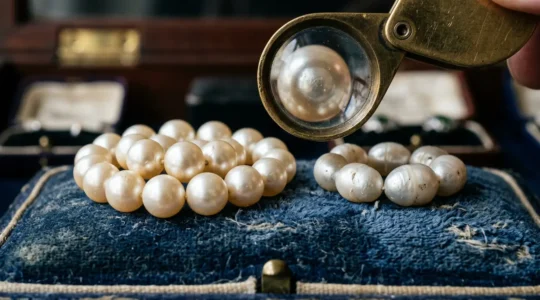
Vintage Akoya vs Freshwater: How to Spot Quality Pearls in UK Antique Shops?
The critical question for a vintage pearl hunter isn’t « is it real? », but « is it a sound investment or a beautiful liability? ». Authenticity tests like the « tooth test » are unreliable against modern fakes and reveal nothing about a pearl’s structural…
Lire la suite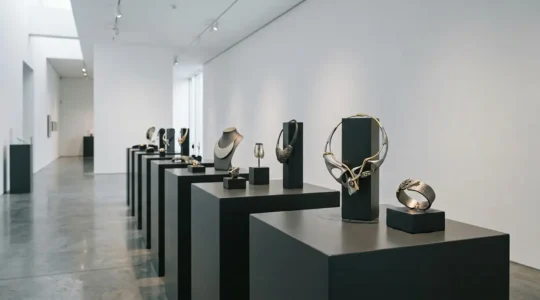
Collecting Future Antiques: How to Identify Investment-Grade Modern British Jewellers
Investing in contemporary British art jewellery is not about acquiring precious materials; it’s about curating a legacy through visionary foresight. True value resides in the trifecta of a unique artistic signature, radical material innovation, and impeccably documented provenance. The secondary…
Lire la suite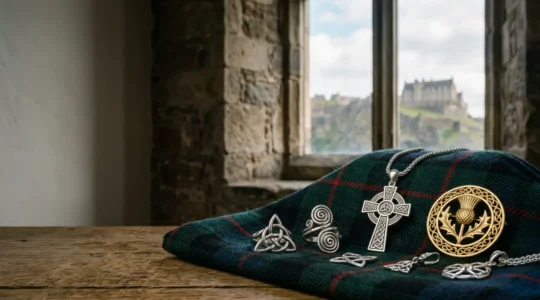
What Do Celtic Knots Actually Symbolize in Scottish Heritage Jewellery?
Beyond simple decoration, British and Irish heritage jewellery was a complex, silent language used to communicate love, loyalty, political allegiance, and social status. The way a Claddagh ring is worn signals marital availability, while Suffragette colours were a secret sign…
Lire la suite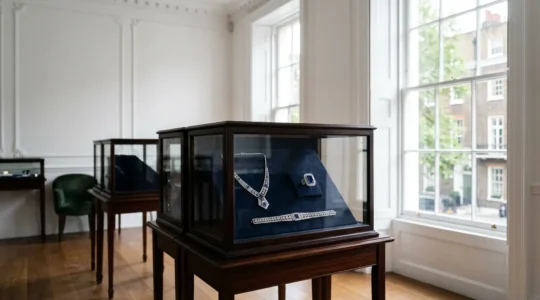
Why Art Deco Pieces Outperform Other Vintage Styles in UK Resale Markets
Art Deco jewellery’s superior resale value is driven by quantifiable factors of scarcity and superior engineering, not just aesthetics. Hand-fabricated construction using specific early platinum alloys creates a finite, high-quality supply that cannot be mass-replicated. Unique diamond cuts, such as…
Lire la suite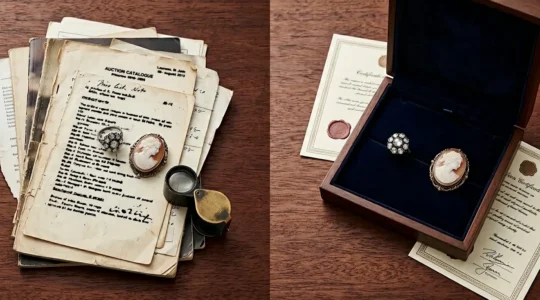
UK Auctions vs. Dealers: An Insider’s Guide to Sourcing Rare Antique Jewellery
The common wisdom that dealers are ‘safe’ and auctions are ‘risky’ is a dangerous oversimplification for new collectors. The true cost of an auction piece is often 30% higher than the hammer price due to hidden fees. Dealers offer warranties,…
Lire la suite
Inheritance Tax on Jewellery: How to Value Heirlooms Correctly?
Receiving a piece of family jewellery is a deeply personal moment, a tangible link to a loved one. Yet, for an executor, this inheritance immediately brings with it a set of complex legal and financial responsibilities. In the midst of…
Lire la suiteAre old vintage watches worth anything?
The fascination with timepieces of bygone eras never seems to fade, with devotees continually speculating about the potential worth of old vintage watches. Amid a bustling market for time-worn treasures, many wonder if that aging wrist adornment tucked away in…
Lire la suiteFrom Pocket to Wrist: The Evolution of Vintage Watch Styles
Delving into the realm of timekeeping unveils a captivating journey, from the sophistication of pocket watches to the practical elegance of wristwatches. The rich narrative of timepieces showcases not only the march of technology but the fashion trends and societal…
Lire la suiteWhat you should know about pre-owned jewelry
Delving into the world of pre-owned jewelry can feel akin to unearthing hidden treasures, each piece holding its own unique history and charm. From antique jewelry with a story to tell, to luxury brands offering an affordable entry into the…
Lire la suiteNot just trends: timeless pendant styles in antique jewelry
Beyond fleeting fashion fads, enduring pendant styles found in antique jewelry continue to captivate attention. With their captivating allure and intricate designs, these exquisite pieces offer an unmatched blend of sophistication and heritage. This write-up delves into the timeless elegance…
Lire la suite