Jewelry Care and Maintenance
Your jewellery tells a story—whether it is a grandmother’s engagement ring, a vintage Rolex inherited from your father, or a simple gold chain worn daily on the London Tube. Yet without proper care, even the most precious pieces deteriorate faster than you might expect. Hard water deposits, skin acids, improper storage and well-intentioned but misguided cleaning attempts can all diminish both the beauty and value of your collection.
This comprehensive resource covers everything you need to know about maintaining your jewellery in peak condition. From understanding why certain metals behave differently under daily wear to recognising when professional repair is essential—and how to find a genuinely qualified goldsmith rather than a sales assistant—you will gain the knowledge to protect your pieces for generations. Whether you are dealing with a delicate Victorian locket or wondering how often to service a watch that rarely leaves the safe, the answers lie ahead.
Think of jewellery maintenance as preventive healthcare for your valuables. Small, regular interventions prevent catastrophic failures. A chain checked annually rarely snaps unexpectedly. A ring cleaned properly never develops the stubborn buildup that requires aggressive treatment. The time invested in understanding these principles pays dividends in preserved beauty and retained value.
How Different Metals Respond to Daily Wear
Not all gold is created equal, and understanding the practical differences between alloys helps you make informed decisions about which pieces suit your lifestyle. The distinction matters particularly for items subjected to constant stress.
The 9ct versus 18ct gold debate
Counterintuitively, 9ct gold—which contains more alloy metals—tends to be harder but more brittle than 18ct gold. This means a 9ct ring might resist scratches better during your daily commute, yet snap under sudden pressure that would merely bend an 18ct piece. For rings worn constantly, 18ct often proves more durable despite its softer surface, as it absorbs impacts through deformation rather than fracture.
Platinum’s grey patina phenomenon
Platinum owners frequently notice their rings developing a matte, greyish appearance over time. This patina results from microscopic scratches redistributing metal across the surface rather than removing it. Unlike gold, platinum does not wear away—it simply moves. Many wearers come to appreciate this subtle, antique character, though professional polishing can restore the original mirror finish when desired.
White gold and the rhodium question
White gold naturally tends toward a slightly warm tone. The bright, silvery appearance comes from rhodium plating, which wears away over time—typically within 12 to 18 months for rings worn daily. Palladium white gold requires replating less frequently, making it a practical alternative for those who prefer lower maintenance. Every solder repair on white gold necessitates fresh rhodium plating, adding cost to what might otherwise seem straightforward work.
Safe Cleaning Techniques for Every Piece
The cleaning methods that work brilliantly for one piece can destroy another. Understanding your jewellery’s specific vulnerabilities prevents costly mistakes.
The hard water challenge
Areas with hard water—common across much of England—face particular challenges. Limescale deposits accumulate in intricate settings, dimming diamond brilliance and clogging pavé work. Ultrasonic cleaners excel at removing these deposits from robust pieces like diamond solitaires in platinum settings. Steam jets offer an alternative that works well without the vibration risks that threaten delicate vintage pieces.
Temperature sensitivity in gemstones
Hot water that feels merely warm to your hands can crack tanzanite and opals through thermal shock. These stones require lukewarm water at most, with gradual temperature changes. The convenience of quick cleaning under hot tap water has ruined countless irreplaceable gems. Similarly, pearls and opals should never contact vinegar-based cleaning solutions—the acid damages their surface permanently.
The soap accumulation problem
Washing hands whilst wearing rings creates a gradual buildup that many owners fail to notice until their diamonds appear lifeless. Soap residue acts as a magnet for further grime, creating a cycle of dulling. Key prevention strategies include:
- Removing rings before applying hand cream or washing up
- Weekly cleaning with mild washing-up liquid and a soft toothbrush
- Rinsing thoroughly in lukewarm water
- Drying pavé settings with a lint-free cloth to prevent water spots
Storage Solutions That Prevent Damage
Where and how you store jewellery affects its condition as much as how you clean it. The wrong environment accelerates tarnish, weakens threads and even corrodes metal.
Jewellery box materials matter
Not all jewellery boxes protect their contents equally. Oak releases tannic acid that accelerates silver tarnish. Cheap boxes often use adhesives that emit corrosive gases, attacking silver and even gold alloys over time. Quality velvet-lined cases with acid-free materials provide the safest environment, though leather remains an acceptable alternative provided it is vegetable-tanned rather than chemically processed.
Anti-tarnish strips and silica gel
Those small 3M anti-tarnish strips do work—but only in reasonably airtight containers. In an open jewellery tray, they exhaust their capacity within weeks. Silica gel packets prove particularly valuable in the UK climate, where ambient humidity accelerates oxidation. Watches stored in safes benefit significantly from these moisture absorbers, especially vintage pieces with leather straps susceptible to mould.
What to avoid wrapping in cotton wool
The traditional advice to wrap precious pieces in cotton wool proves dangerously wrong for opals and pearls. Cotton fibres absorb moisture that these organic gems require, causing them to dry out, crack and lose lustre. Soft acid-free tissue or dedicated silk pouches provide safer alternatives.
Chain Types and Their Repair Realities
Understanding chain construction before purchase—or before a break occurs—helps set realistic expectations about repairability and cost.
Chains that can be fixed
Curb chains represent the most repairable design, with individual links that a skilled goldsmith can replace or resolder relatively easily. Snake chains, despite their elegant appearance, present greater challenges—damage often requires replacing entire sections rather than spot repairs. Byzantine chains can typically be shortened without disrupting their intricate pattern, provided the goldsmith understands the link sequence.
Chains that cannot be economically repaired
Herringbone chains, once kinked, rarely return to their original flat lie. The damage is essentially permanent. Hollow rope chains pose the notorious meltdown risk—their thin walls collapse under soldering heat, often costing more to repair than replace. Box chains typically snap at their connection points, and whilst repair is possible, the joints often show.
White gold chain complications
Every solder repair on white gold chains requires subsequent rhodium plating to maintain colour consistency. This additional step increases both cost and turnaround time. For frequently repaired chains, switching to yellow gold or platinum eliminates this recurring expense.
Finding Qualified Professionals for Repairs
The difference between a skilled bench goldsmith and a high street sales assistant determines whether your heirloom survives restoration intact.
Identifying genuine expertise
The NAJ (National Association of Jewellers) coat of arms indicates membership in a professional body with ethical standards, though membership alone does not guarantee repair skills. The critical question: does this shop repair on-site, or send pieces away? Third-party repairs introduce handling risks and remove accountability. Always ask to speak directly with the person who will work on your piece.
Red flags to recognise
Promises of same-day repair for complex work should raise immediate concerns. Quality restoration requires time—rushing leads to mistakes that can snap old shanks during resizing or damage heat-sensitive stones. Similarly, verify your insurance covers any damage occurring during third-party repair; many policies exclude work performed outside authorised networks.
Questions worth asking
- Will you perform this repair yourself, on these premises?
- What specific risks does this repair carry for my piece?
- Have you worked with this era or style of jewellery before?
- What happens if something goes wrong during the work?
Caring for Strung and Beaded Jewellery
Pearl necklaces, gemstone chokers and beaded pieces require different maintenance approaches than metalwork.
Restringing frequency
Silk thread weakens with exposure to skin acids and stretches with wear. Chokers, worn tight against the neck, degrade faster than longer necklaces—restringing every six to twelve months prevents catastrophic breaks that scatter irreplaceable beads. Tiger tail wire offers greater durability for heavy gemstone beads but lacks the drape and knot-holding capacity of traditional silk.
Storage considerations
Storing chokers flat prevents the kinking that hanging causes. Snake chains and delicate beaded pieces benefit from compartmentalised trays rather than hanging trees, which allow tangling and create stress points. Magnetic clasps, whilst convenient, pose dangers for heavy pieces—they can unexpectedly release under the weight of substantial gemstones.
Vintage Timepiece Maintenance
Antique and vintage watches demand specialised knowledge that differs significantly from jewellery care.
The dried oil problem
A watch sitting unused is not a watch being preserved. Lubricants deteriorate whether the watch runs or not, eventually becoming abrasive rather than protective. Running a vintage piece with dried oil damages pivots and escapement components—damage that costs far more to repair than regular servicing prevents. Even safe-stored watches benefit from professional servicing every five to seven years.
Winding and handling
Pocket watches require particular care when winding—excessive force snaps mainsprings, and replacement parts for antique movements prove increasingly scarce. The polishing mistake that devastates vintage Rolex values involves removing original finish in pursuit of shine, eliminating the patina collectors prize and potentially reducing value by thirty percent or more.
Radioactive dial concerns
Pre-1960s watches with luminous dials may contain radium, which remains radioactive indefinitely. Later tritium-based lume decays safely and presents minimal risk. If uncertain about your vintage dial, specialist horologists can advise on safe handling and storage precautions.
Caring for jewellery and timepieces properly requires understanding both universal principles and piece-specific considerations. The investment in knowledge prevents costly mistakes, preserves sentimental value and maintains financial worth. Whether cleaning a daily-wear engagement ring or deciding whether a crumbling Victorian locket belongs in museum wax or on your lapel, informed decisions protect what matters most. The detailed articles throughout this section explore each topic in depth—start with whatever concerns your collection most urgently.
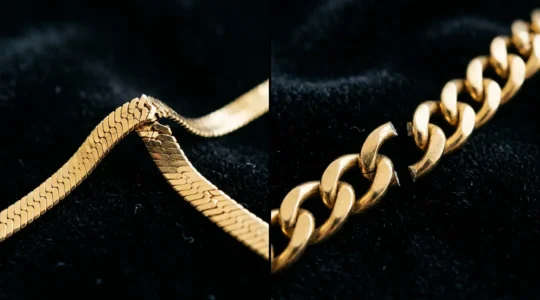
Snake vs Curb: Which Gold Chains Can Actually Be Repaired If Broken?
The most important factor in a gold chain’s value isn’t its price, but its ability to be repaired—a detail that separates a lifetime investment from a future piece of scrap. Delicate weaves like Snake and Herringbone are often unfixable once…
Read more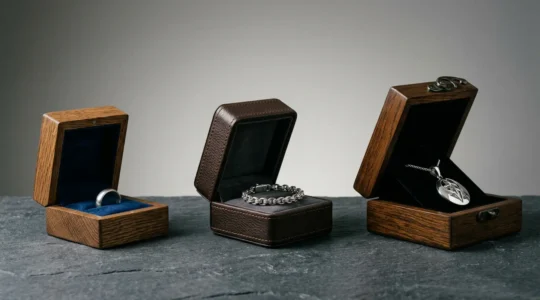
Oak, Leather, or Velvet: Which Jewellery Box Materials Prevent Tarnish Best?
Your jewellery box is not a passive safe; its construction materials, particularly the glues, are likely the primary source of the corrosive gases tarnishing your silver. Most commercial jewellery boxes use adhesives that “off-gas” sulfur compounds, accelerating corrosion even in…
Read more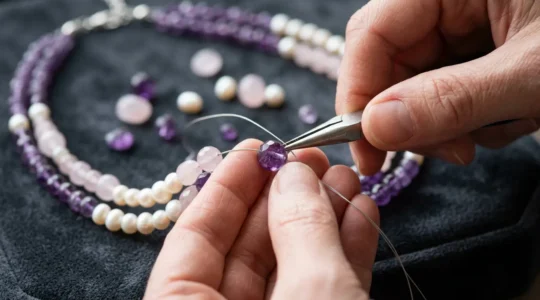
Restringing Heavy Gemstone Chokers: A Professional’s Guide to When and Why
The decision to restring a heavy choker depends more on material science than a simple calendar schedule. Heavy beads exert constant tensile stress that demands high-strength wire, not just traditional silk. Invisible factors like skin chemistry, clasp mechanics, and bead…
Read more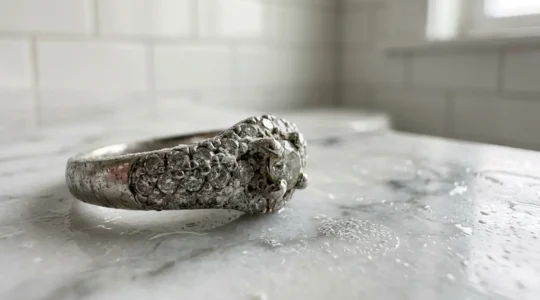
How to Remove Limescale Buildup from Diamond Rings in Hard Water Areas?
Contrary to popular DIY advice, common household cleaners like vinegar can cause costly, irreversible damage to the rhodium plating on most white gold rings sold in the UK. The dull film on your ring isn’t just dirt; it’s a chemical…
Read more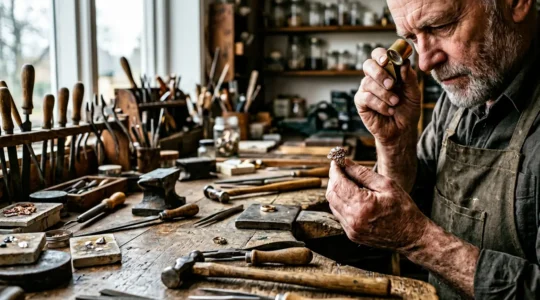
How to Verify if a Jeweller Is Qualified to Repair Your Heirlooms?
Entrusting an heirloom isn’t a matter of trust, but of methodical verification; the jeweller’s qualifications are more critical than their location or positive online reviews. Look for the National Association of Jewellers (NAJ) coat of arms as a primary indicator…
Read more
9ct vs. 18ct Gold: Which Better Withstands the Daily Grind?
The common belief that ‘harder’ 9ct gold is more durable for daily wear is a dangerous oversimplification. True resilience comes from malleability (how a metal bends without breaking), not just surface hardness (how it resists scratches). Structural choices, like solid…
Read more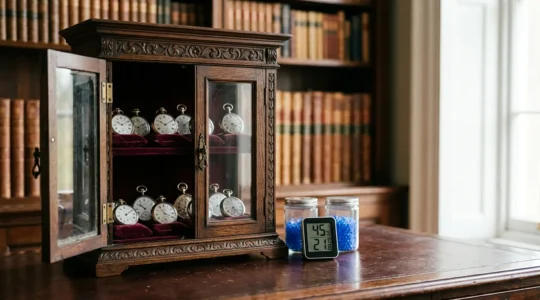
How to Store Antique Timepieces in the UK to Prevent Moisture Damage
In summary: The damp UK climate poses a direct threat to the mechanical and material integrity of vintage timepieces. Passive storage is insufficient; you must actively engineer a stable micro-environment using desiccants and proper monitoring. Understanding material-specific risks like dried…
Read more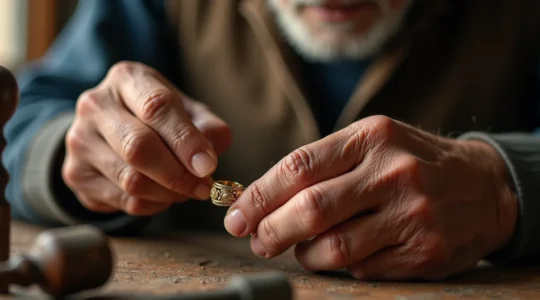
Repairing Sentimental Jewellery: When Is Restoration Too Risky?
Deciding to repair an heirloom isn’t just about cost; it’s about understanding the metal’s physical limits to avoid irreversible damage. The biggest risk isn’t breakage during repair, but choosing the wrong technique or attempting to restore a piece that should…
Read moreHow to Take Care of Your Vintage Watch
Vintage timepieces, with their intricate mechanisms and timeless aesthetics, demand a unique level of care and attention. These precious accessories evoke nostalgia, embody history, and often hold sentimental value. Therefore, maintaining their pristine condition requires more than just casual upkeep….
Read moreHow to choose the right metal polishing techniques
Metal polishing techniques abound, each with its unique features and applications. Unraveling the complexities of these methods demands patience and a keen eye for detail. Choosing not just any, but the right tools and compounds, plays a role equally as…
Read more