Fine Jewelry
Fine jewellery represents a significant investment—both financial and emotional. Whether you are considering an engagement ring, inheriting a family heirloom, or building a collection of treasured pieces, understanding the fundamentals can mean the difference between a wise purchase and a costly mistake. The UK market presents unique considerations, from the legal requirement for hallmarking to the prevalence of both 9ct and 18ct gold options rarely seen elsewhere.
This resource covers the essential knowledge every buyer and collector needs: how to authenticate precious metals through British hallmarks, the practical differences between gold purities, which gemstones genuinely withstand daily wear, and how to navigate increasingly complex ethical sourcing claims. Each topic connects to deeper explorations available throughout this section, but the foundations laid here will transform how you evaluate, purchase, and care for fine jewellery.
Think of this as your map to a vast territory. By the end, you will understand why a seemingly identical gold bracelet might be worth £400 or £4,000, why that vivid ruby may shatter if cleaned incorrectly, and why the tiny stamps inside your ring tell a story spanning centuries of British craftsmanship standards.
How do British hallmarks guarantee authenticity?
The United Kingdom operates one of the world’s oldest and most rigorous precious metal assaying systems. Since the Hallmarking Act requires all gold, silver, platinum and palladium items above minimum weights to carry official marks before sale, understanding these stamps provides your first line of defence against fraud.
The four essential hallmark symbols
A complete British hallmark typically contains four distinct symbols: the sponsor’s mark (identifying the maker or retailer), the fineness mark (indicating metal purity such as 375 for 9ct gold or 750 for 18ct), the assay office mark (showing which of the four UK offices—Birmingham, Edinburgh, London, or Sheffield—tested the piece), and optionally a date letter. Each symbol tells part of the story, and learning to read them with a simple 10x loupe becomes second nature with practice.
Why the assay office stamp affects resale value
For collectors and those purchasing pre-owned pieces, the assay office mark carries weight beyond mere identification. London marks, particularly on antique pieces, often command premiums at auction. The Birmingham anchor, meanwhile, appears on the vast majority of British jewellery produced over the past century. Crucially, any piece sold in the UK without proper hallmarking—regardless of actual metal content—cannot legally be described as gold, silver or platinum.
Spotting common authentication pitfalls
The pre-owned market, particularly online platforms, presents specific challenges. Gold-filled items (a thick gold layer bonded to base metal) are sometimes misrepresented as solid gold. Italian pieces marked ‘750’ indicate 18ct purity but lack the comprehensive traceability of British hallmarks. When examining designer pieces like pre-owned Cartier or Tiffany, serial number verification with the manufacturer provides an additional authentication layer that paperwork alone cannot match—skilled forgers often find documents easier to fake than the jewellery itself.
What separates 9ct from 18ct gold in practice?
The UK remains unusual in its widespread use of 9ct gold, a 37.5% pure alloy that much of the world considers below the threshold for ‘real’ gold. Understanding the practical implications of gold purity helps you make informed choices rather than defaulting to assumptions about quality.
Durability versus purity
Higher carat does not automatically mean better. 9ct gold contains more hardening alloys (typically copper and silver), making it significantly more resistant to scratches and dents. For heavy signet rings worn daily, robust watch cases, or children’s jewellery, 9ct often outperforms 18ct in practical terms. The trade-off appears in colour—18ct displays a richer, more saturated yellow—and in prestige, particularly for engagement rings where the deeper gold tone holds traditional significance.
Skin sensitivities and alloy composition
The higher proportion of base metals in 9ct gold increases the likelihood of skin reactions, particularly from nickel. White gold in both purities typically contains nickel unless specifically marketed as hypoallergenic. Those with known sensitivities often find 18ct yellow gold or platinum the safest choices. Rose gold, created by increasing copper content, tends to be well-tolerated but can trigger reactions in those with copper allergies.
Solid versus hollow construction
Beyond purity, construction method dramatically affects both value and durability. Hollow gold pieces appear substantial but weigh significantly less—a fact easily checked by handling similar items or requesting the gram weight. While hollow construction makes larger pieces affordable, it introduces serious limitations:
- Dents in hollow bangles typically cannot be repaired invisibly
- Hollow chains cannot be shortened by a jeweller without leaving visible joins
- The ‘gram price’ calculation (dividing total cost by weight) quickly exposes overpriced lightweight pieces
A simple tap test produces a distinctly different sound between solid and hollow gold, though experience helps in interpreting the results. When in doubt, reputable jewellers will always disclose construction type.
Which gemstones truly survive daily wear?
The Mohs hardness scale provides only part of the picture when selecting stones for everyday jewellery. A gemstone might resist scratching yet crack easily from impact, or survive bumps but dissolve when exposed to common chemicals.
The sapphire advantage
Sapphires score 9 on the Mohs scale—second only to diamonds—making them genuinely suitable for engagement rings and everyday pieces. Their crystal structure also resists chipping, unlike some alternatives. Blue sapphires remain classic choices, but the corundum family includes pinks, yellows, and the prized padparadscha with its salmon-pink hue.
Stones requiring careful consideration
Several popular gemstones present durability challenges often glossed over during sales:
- Emeralds typically contain natural inclusions that create internal weaknesses; the oil treatments commonly applied can dry out over time
- Tanzanite scratches relatively easily and can cleave along crystal planes if knocked at the wrong angle
- Morganite often appears more pink in showroom lighting than in natural daylight, where peach tones dominate
- Opals contain water and can crack if allowed to dry out or experience temperature shocks
These stones remain beautiful choices for earrings, pendants, or occasional-wear rings, but understanding their limitations prevents disappointment.
The critical role of settings
Protective settings extend the lifespan of softer stones dramatically. A bezel setting—where metal surrounds the entire girdle of the stone—shields vulnerable edges far better than exposed prong settings. For fancy-cut diamonds with pointed ends, such as marquise and pear shapes, V-shaped prongs specifically designed to protect those fragile tips prevent the chipping that plagues poorly-mounted elongated stones.
How do treatments affect gemstone value and care?
The vast majority of coloured gemstones undergo some form of treatment to enhance colour or clarity. The key lies in understanding which treatments are stable, which require special care, and how treatment status affects both resale value and insurance.
Heat treatment: the industry standard
Approximately 95% of sapphires on the market have been heat treated, a stable enhancement that permanently improves colour and clarity without affecting durability. Heat treatment is widely accepted, fully disclosed by reputable sellers, and reflected in pricing. Genuinely unheated sapphires of fine quality command significant premiums—often 30-50% more—but require certification from recognised laboratories such as GIA or, in the UK, AnchorCert.
Problematic treatments to avoid
Glass-filled rubies represent a particular concern for UK buyers. This process fills natural fractures with lead glass, dramatically improving appearance but creating a stone that can dissolve or become cloudy when exposed to lemon juice, household cleaners, or even ultrasonic cleaning. These treatments should always be disclosed but frequently are not, particularly in overseas purchases. The price difference between a glass-filled ruby and an untreated stone of similar appearance can exceed 90%.
Origin premiums and provenance
Geographic origin affects prices significantly for top-quality stones. Burmese rubies and Kashmir sapphires command premiums based on historical reputation, though stones from Mozambique or Madagascar can be visually indistinguishable. For investment-grade purchases, origin certification from a respected laboratory provides documentation essential for resale. For personal enjoyment, the stone’s beauty matters more than its passport.
What does ethical sourcing actually mean?
Marketing terminology around ethical jewellery has become increasingly complex, with terms like ‘conflict-free’, ‘ethical’, ‘sustainable’, and ‘Fairtrade’ often used imprecisely. Understanding the distinctions helps you align purchases with your values.
Conflict-free versus ethically sourced
‘Conflict-free’ specifically means diamonds have not funded armed conflict, verified through the Kimberley Process. This certification addresses a narrow—though important—concern but says nothing about environmental practices, labour conditions, or community impact. ‘Ethically sourced’ implies broader considerations but lacks standardised definition, making it vulnerable to greenwashing.
Certified alternatives
For those seeking verified ethical credentials, specific certifications provide accountability:
- Fairtrade Gold guarantees miners receive fair prices, premiums for community development, and assurance of safe working conditions
- Fairmined certification supports artisanal and small-scale mining communities with similar benefits
- Recycled gold from certified sources avoids new mining entirely, though critics note it does not directly benefit mining communities
Each approach involves trade-offs. Recycled gold may appear greenest but provides no income to miners. Fairtrade gold costs more but creates tangible community benefits. Lab-grown diamonds avoid mining but require significant energy to produce.
Lab-grown diamonds: the environmental debate
Lab-grown diamonds are chemically identical to mined stones but their environmental credentials depend heavily on production methods and energy sources. A diamond grown using renewable energy has a dramatically smaller footprint than one produced in a facility powered by coal. Asking suppliers about their energy sourcing provides more meaningful information than accepting ‘eco-friendly’ claims at face value.
How should you select metals for your skin tone?
While personal preference ultimately guides any jewellery purchase, understanding the interplay between metal colours and skin undertones helps explain why certain pieces seem to ‘glow’ on some wearers while appearing dull on others.
Undertone basics
Skin undertones fall into three categories: cool (pink or bluish undertones), warm (yellow or golden undertones), and neutral (a balance of both). The common vein test—checking whether wrist veins appear blue or green—provides a starting point but proves unreliable for many people, particularly those with deeper skin tones or visible veins of multiple colours.
General guidelines with flexibility
Traditional guidance suggests cool undertones pair best with white metals and platinum, while warm undertones complement yellow gold. However, these rules oversimplify reality:
- Rose gold functions as a neutral, flattering both cool and warm undertones
- 18ct yellow gold appears warmer than 9ct, which can lean slightly pale
- Hair colour affects the overall impression—very dark hair can make yellow gold appear more dramatic
- Seasonal tanning shifts undertones, potentially changing which metals look best
Rather than following rigid rules, trying pieces against your skin in natural daylight reveals more than any theory.
What practical factors matter for everyday jewellery?
Beyond aesthetics and value, practical considerations determine whether a piece becomes a treasured daily companion or sits unworn in a drawer.
Chain selection and durability
Chain construction varies enormously in strength. Curb chains and trace chains with soldered links withstand heavy pendants reliably. Snake chains, by contrast, cannot be repaired invisibly once kinked—a single night’s sleep caught on a pillow can create permanent damage. Bolt ring clasps, while common, fail more frequently than lobster clasps on heavier pieces, making clasp quality as important as chain construction for necklaces of significant value.
Earring fastening security
For valuable diamond studs, screw backs provide more security than butterfly backs, virtually eliminating loss from accidental loosening. The ‘Alpha’ back system offers similar security with easier daily use. Beyond security, setting height affects comfort—low-profile settings allow comfortable sleep, while higher settings may catch on hair or pillows.
Care and maintenance realities
All jewellery benefits from thoughtful care, but some vulnerabilities surprise new owners:
- Sleeping in chain necklaces gradually wears through links at friction points
- Hairspray, perfume, and lotions create films that dull diamond brilliance within days
- Ultrasonic cleaners damage pearls, opals, emeralds, and glass-filled stones
- Deep-set hallmarks require careful cleaning to avoid damaging the stamps that verify authenticity
Understanding these factors before purchase helps select pieces aligned with your actual lifestyle rather than an idealised wearing pattern.
Building knowledge for confident collecting
Fine jewellery combines artistry, material science, cultural significance, and financial considerations in ways few other purchases match. The topics introduced here—hallmark authentication, metal selection, gemstone durability, ethical sourcing, and practical wear considerations—each merit deeper exploration based on your specific interests and purchases.
The articles throughout this section examine individual questions in detail, from decoding the specific symbols on British hallmarks to comparing insurance requirements for high-value pieces worn outside the home. Use this overview as your starting point, returning to specific sections as you encounter new pieces, consider major purchases, or simply wish to understand the remarkable craftsmanship embodied in fine jewellery.
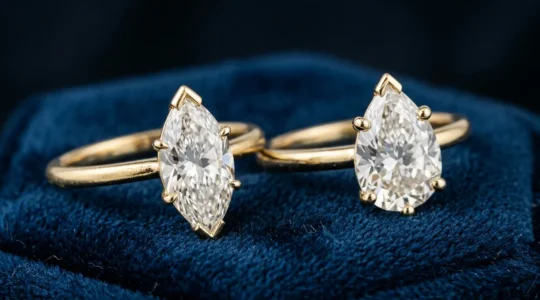
Marquise and Pear Diamonds: A Security Expert’s Guide to Preventing Chipped Points
In summary: The safety of a pointed diamond depends on its complete security system, not just the setting style. Key protective features include V-shaped prongs, a suitable length-to-width ratio (1.75-2.15), and hand-forged construction. Choosing a bezel setting is not a…
Lire la suite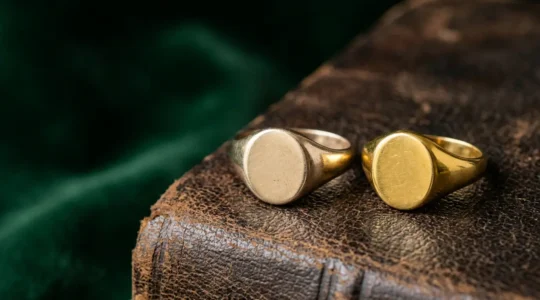
9ct vs 18ct Gold: Is Higher Carat Always Better for Jewellery in the UK?
The British preference for 9ct gold isn’t a compromise on quality; it’s a deliberate choice for superior everyday durability and a more subtle, understated aesthetic. 9ct gold’s alloy composition makes it tougher and more resistant to the dents and deformations…
Lire la suite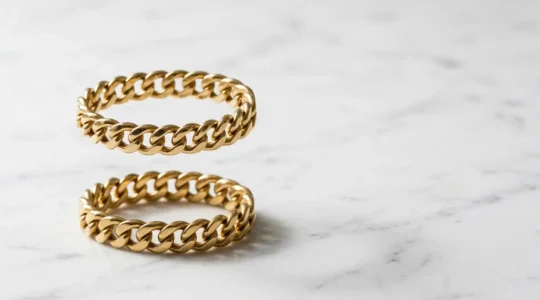
Hollow vs Solid Gold: A Buyer’s Forensic Guide to Spotting the Difference Online
Contrary to what slick online photos suggest, the ‘heft’ of a gold bracelet is often an illusion; the real difference between a lifetime investment and a dent-prone disappointment is not what you see, but what you can scientifically deduce. Hollow…
Lire la suite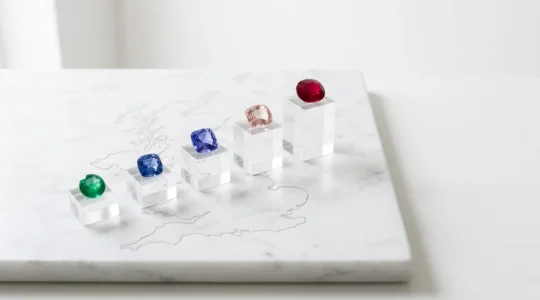
Beyond Diamonds: Which Coloured Gemstones Can Survive Daily Wear in the UK?
The durability of a coloured gemstone ring isn’t just its Mohs hardness score; it’s a system combining a gem’s hidden weaknesses with the engineering of its setting. Hardness (scratch resistance) is useless without toughness (chip resistance), which is why emeralds…
Lire la suite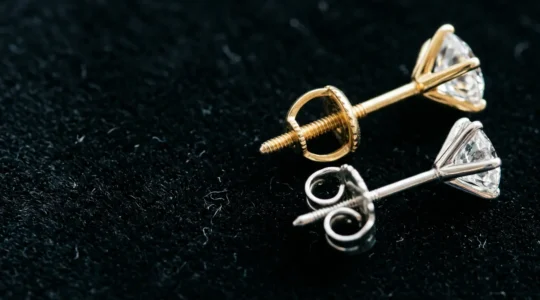
The Definitive Guide to Securing High-Value Diamond Studs
Securing a high-value diamond stud is not about choosing a single ‘best’ back, but about designing a complete system that manages weight, friction, and mechanical integrity. Low-profile ‘martini’ or ‘basket’ settings are more crucial than the back itself, as they…
Lire la suite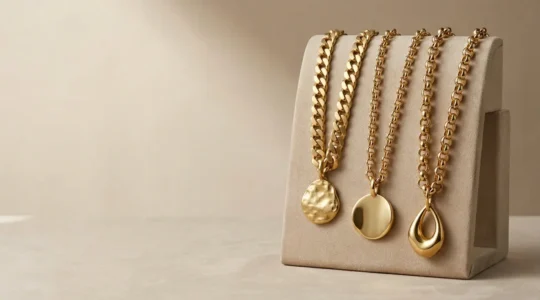
Curb, Trace, or Belcher: Which Gold Chain Is Strongest for Heavy Pendants?
The strength of a gold chain is determined by engineering principles, not just its thickness or weight. Material matters: 18ct gold’s ductility allows it to bend under stress where 9ct’s brittleness causes it to snap. Structure is key: Interlocking links…
Lire la suite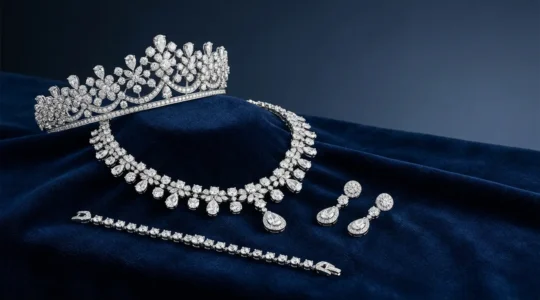
High Jewellery Parures: When Is It Appropriate to Wear a Full Set?
Wearing high jewellery today is less about following archaic rules and more about mastering a modern language of social signalling. The decision to wear a full parure or deconstruct it is a strategic choice that communicates your social awareness. This…
Lire la suite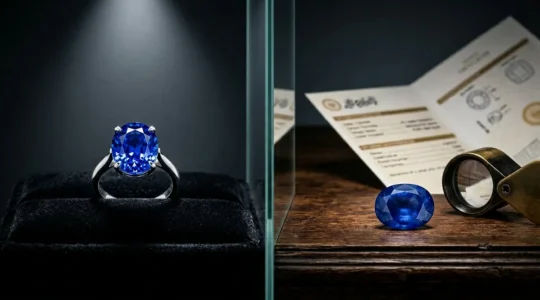
Unheated vs Heated Sapphires: How Much Does Treatment Affect UK Resale Value?
The true cost of a heated sapphire isn’t its price tag, but its drastic loss of value and liquidity on the UK secondary market. Heated sapphires are common and beautified, but auction houses and top dealers often prefer unheated stones,…
Lire la suite
Gold or Silver: Which Metal Truly Flatters Pale British Complexions?
Contrary to popular belief, the ‘vein test’ is an unreliable method for choosing between gold and silver, especially for pale skin. Your most flattering metal depends on the nuanced interaction between your skin’s undertone, dynamic factors like hair colour, and…
Lire la suite
Is Fairtrade Gold Worth the Premium for UK Engagement Rings?
The premium for Fairtrade gold is justified, but only if you treat it as a verifiable ethical investment, not just a label. ‘Conflict-Free’ is a legal minimum, not a guarantee of ethical practice; Fairtrade offers audited standards on child labour,…
Lire la suite