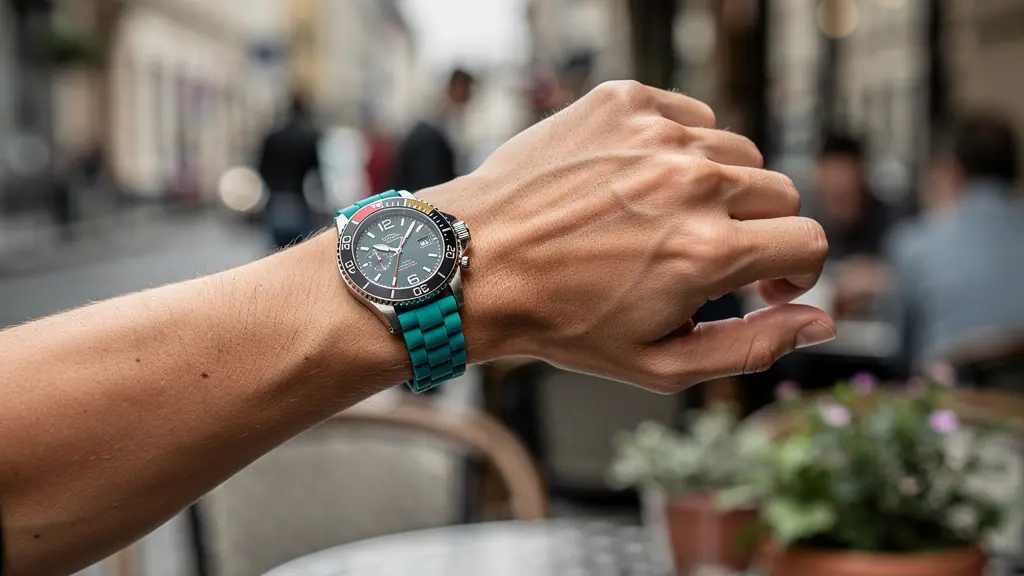
Rubber strap essentials in 30 seconds
- Measure your lug width (18-22mm), not your case diameter
- FKM fluoroelastomer outlasts standard silicone and resists UV fading
- Start with versatile colours: navy, teal, or burnt orange
- Curved-end straps provide seamless integration with your case
Why Omega owners are ditching metal for rubber
Something shifted in the watch world. I noticed it first at watch meetups around 2023—Speedmasters on bright orange straps, Seamasters dressed in forest green. What once felt like sacrilege now looks utterly contemporary. And the numbers back this up: the global watch strap market is projected to reach USD 12.8 billion by 2033, growing at 5.4% annually through personalisation demand.
The practical arguments stack up quickly. Metal bracelets scratch. They catch arm hair. They freeze against your wrist in January and stick uncomfortably in July. Rubber solves every one of those irritations. But here’s what actually convinced me: FKM fluoroelastomer isn’t your grandfather’s rubber. This is serious material science.
What makes FKM different: According to technical analysis by Berny Watch, FKM contains 66% fluorine content, providing superior chemical resistance, UV stability that prevents fading, and temperature tolerance up to 300°C. Standard silicone simply cannot match this durability profile.
The honest caveat? Rubber isn’t for everything. Black-tie events still call for metal or leather. Board meetings might warrant the bracelet’s gravitas. But for the other 90% of life—travel, weekends, summer holidays, casual Fridays—rubber wins on comfort, versatility, and visual interest. That’s the trade-off I recommend clients consider.
Finding your perfect fit: Omega collections and strap sizes
In my experience advising watch enthusiasts, the most common mistake is purchasing straps based on case diameter rather than the actual lug width measurement. Your 42mm Seamaster doesn’t need a 42mm strap. It needs the precise millimetre gap between the lugs where the spring bars sit. Get this wrong and you’re returning the strap at your own postage expense.
The good news: Omega collections follow reasonably consistent sizing within each family. The summary below covers the models I encounter most frequently. Measure yours anyway—vintage pieces and limited editions occasionally deviate from standard specifications.
| Collection | Case Size | Lug Width | Strap Type | Best For |
|---|---|---|---|---|
| Speedmaster Professional | 42mm | 20mm | Straight or curved | Everyday versatility |
| Seamaster Diver 300M | 42mm | 20mm | Curved-end preferred | Water activities, summer |
| Planet Ocean 42mm | 42mm | 20mm | Curved-end preferred | Active lifestyle, diving |
| Planet Ocean 45.5mm | 45.5mm | 22mm | Curved-end required | Larger wrists, statement piece |
| Aqua Terra | 38-41mm | 19-20mm | Straight works well | Dress-casual crossover |
The Speedmaster Professional’s 20mm lug span confirmed by Worn & Wound makes it compatible with the widest range of aftermarket options. Planet Ocean owners with the larger 45.5mm case need the rarer 22mm width—as noted by aBlogtoWatch in their comprehensive guide. For a precise and case-integrated fit, choosing a dedicated omega rubber strap with curved ends ensures seamless alignment with each model’s profile.
Colour combinations that actually work
Here’s where most guides fail you completely. They show you forty colour swatches without explaining which ones work with your actual dial. Let me save you the experimentation phase.
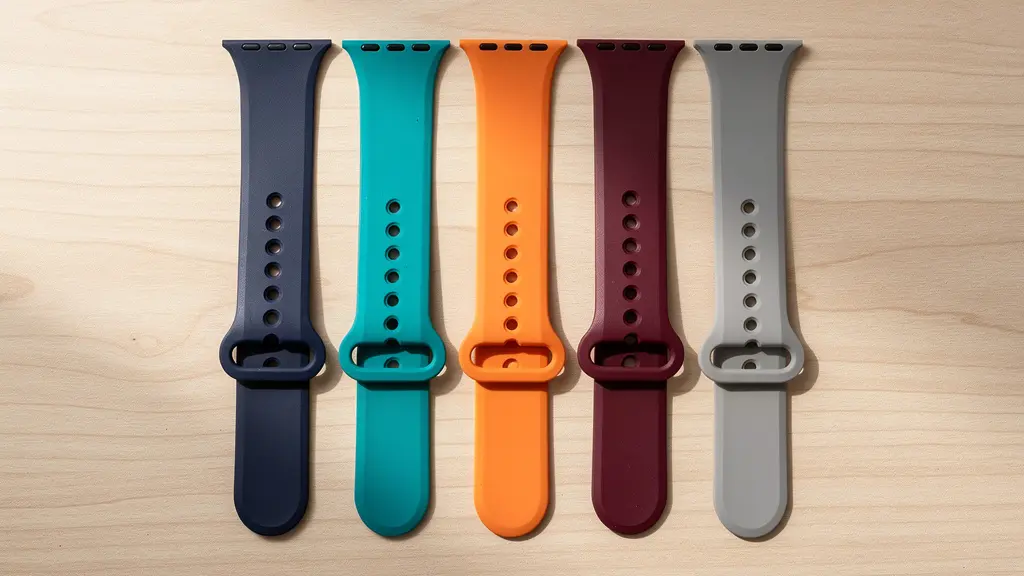
My go-to colour combinations: Blue dials pair beautifully with navy (subtle), teal (contemporary), or burnt orange (bold contrast). Black dials work with almost everything—start with grey or forest green for sophistication. White and silver dials look exceptional with burgundy or classic black. The rule I follow: if you’re unsure, choose a colour that appears somewhere in your dial’s details—a second hand accent, a bezel marker, index printing.
I advised Marcus last year. Financial consultant, 38, wore his Seamaster Diver 300M daily on the original steel bracelet. “It’s boring,” he admitted. Same watch, every day, every occasion. We built him a three-strap rotation: navy for client meetings, bright orange for weekends, and grey for everything in between. Total investment under £150. His words when I saw him six months later: “Feels like I own three different watches.”
The seasonal consideration matters too. Summer calls for lighter, brighter options—teal, orange, even yellow if your personality permits. Winter works better with deeper tones: burgundy, forest green, charcoal. If you’re interested in the sustainability angle of quality rubber versus disposable fashion straps, the eco-friendly rubber straps movement offers perspective on material sourcing and longevity.
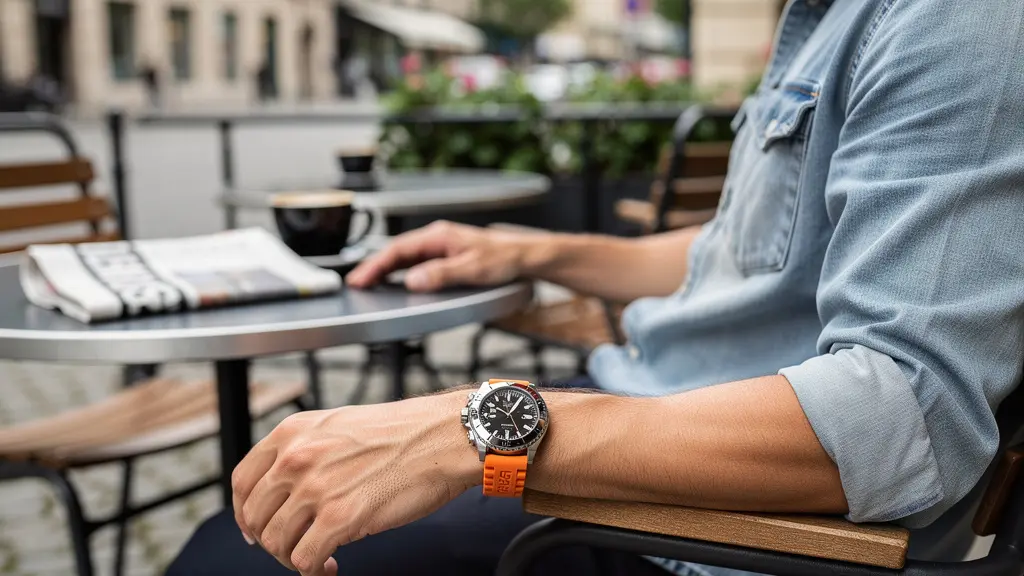
Strong opinion time. I always recommend starting with a neutral vibrant colour—teal or burnt orange—before going full neon. Bold colours demand confidence, and confidence comes from wearing something enough times to own the look. Start moderate. Your second strap can be louder.
Your rubber strap questions answered
Your rubber strap questions answered
Will an aftermarket strap damage my Omega?
No, provided you use quality spring bars and change straps carefully. The risk sits entirely in the installation process—scratching the lugs with a spring bar tool. Use a proper fork-style tool, work over a soft surface, and take your time. Many quality straps include matched spring bars specifically designed for your model.
How long do FKM rubber straps actually last?
With proper care, expect two to four years of regular wear. FKM resists UV degradation better than silicone, so colours fade more slowly. The keepers and buckle typically show wear first. Replace when the rubber starts feeling stiff or loses its suppleness.
Curved end or straight end—which should I choose?
Curved ends provide better visual integration with dive watches like the Seamaster and Planet Ocean. They eliminate the gap between strap and case. Straight ends work fine on Speedmasters and dressier models, and offer more versatility if you own multiple watches with the same lug width.
Can I swim with a rubber strap?
Absolutely—that’s where rubber excels. Salt water, chlorine, sunscreen: none damage quality FKM. Rinse with fresh water after ocean swimming. The strap dries faster than any leather alternative and won’t develop the smell issues some silicone straps exhibit.
Quick care routine for FKM straps
- Rinse with fresh water after salt water or pool exposure
- Clean monthly with mild soap and soft brush
- Store flat, away from direct sunlight when not worn
- Rotate between straps to extend lifespan
The next step for your Omega
Measure your lug width tonight. Grab a ruler, look at the gap between your lugs, and write down the number. That single measurement unlocks a world of customisation options that cost a fraction of official Omega pricing. Your first strap purchase will probably arrive within a week—and the moment you click that rubber onto your Seamaster or Speedmaster, you’ll wonder why you waited so long.
One strap becomes three. It always does.