The essentials on custom Rolex clasps in 30 seconds
- Standard deployment clasps can release under lateral stress—patented mechanisms address this specific failure point
- Reversible modifications preserve resale value; permanent alterations reduce it by 10-20%
- From consultation to fitting, expect 3-4 weeks for a bespoke Swiss-engineered clasp
- Insurance rates for luxury watches run 1-2% of value annually—enhanced security may influence coverage assessments
Why standard Rolex clasps leave collectors uneasy
Rolex makes exceptional watches. This is not a controversial statement. But here is what the brand’s prestige obscures: the Oyster clasp, whilst solid, was engineered for everyday reliability—not for the specific anxieties of collectors who travel frequently or lead active lives. The mechanism handles normal wear beautifully. It was never designed to withstand a ski pole catching the bracelet or the lateral forces of gripping a golf club.
£1.6billion
Total value of watches registered as lost or stolen globally
According to stolen watch market valuation data from early 2025, the total value of registered lost and stolen timepieces reached £1.6 billion. UK losses alone totalled £60 million in the preceding twelve months. Not all losses involve theft. A significant portion involves accidental loss—bracelets releasing during activity, clasps failing under stress.
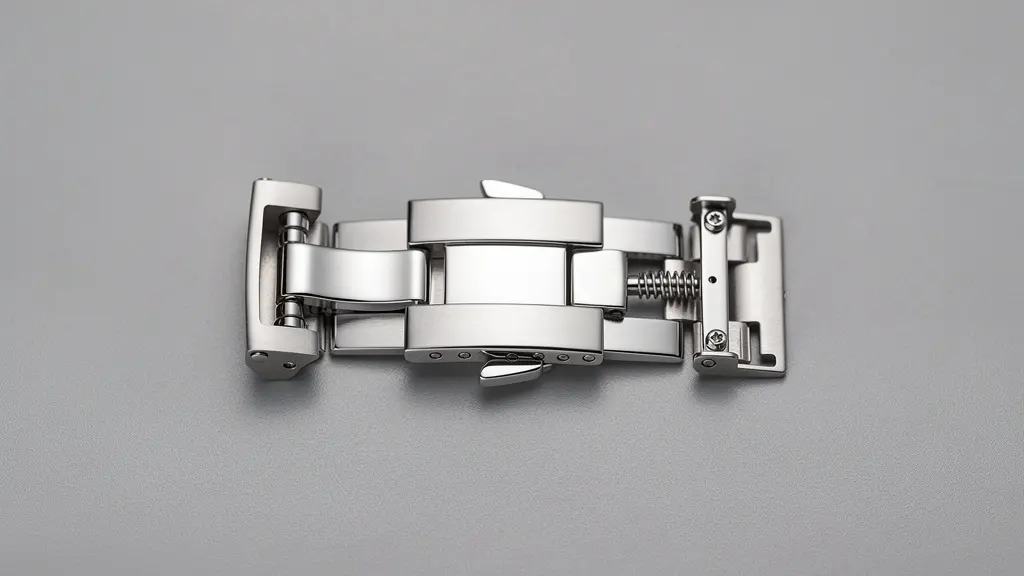
In conversations with collectors I advise, a recurring misconception is that all aftermarket clasps offer equivalent security. Many discover too late that generic replacements lack the engineering rigour required for a timepiece worth thousands. The most common oversight I encounter? Assuming “deployment clasp” automatically means “secure.” It does not.
The engineering behind a clasp that actually holds
Think of a standard deployment clasp like a friction-based system—two surfaces pressing together, held by spring tension. Adequate for walking to the office. Less adequate when your Submariner becomes the most expensive thing between you and a skiing accident. Patented security mechanisms work differently. They incorporate positive locking—mechanical barriers that must be deliberately disengaged before the clasp can open.
Swiss manufacturing standards, as outlined by according to COSC’s 2025 standard, impose strict tolerances on precision components. The new Excellence Chronometer certification tightened daily rate tolerance to 6 seconds instead of 10. This same precision mentality extends to high-end clasp engineering: tolerances measured in fractions of a millimetre, materials tested for corrosion resistance, mechanisms stress-tested for thousands of cycles.
| Criterion | Standard Deployment | Patented Security Mechanism |
|---|---|---|
| Locking type | Friction-based | Positive mechanical lock |
| Lateral stress resistance | Moderate | High (engineered for active wear) |
| Accidental release | Possible under force | Requires deliberate disengagement |
| Micro-adjustment | Limited | Tool-free fine-tuning |
When working with clients on this, I consistently recommend examining the mechanism itself before aesthetics. A beautifully finished Rolex clasp upgrade means nothing if the underlying engineering is no better than what came from the factory. The question is not “does it look premium?” but “what happens when something catches it?”
Personalisation without compromising your investment
Here is the collector’s dilemma: you want to wear your watch confidently. You want it to feel like yours, not a museum piece rotated out of a safe. But you also paid serious money, and the secondary market is unforgiving. According to secondary market analysis 2026, aftermarket modifications reduce Rolex resale values by 10-20%. Some sources cite up to 40% for permanent alterations.
The critical distinction? Reversibility. A clasp that replaces the original without modifying the bracelet itself—keeping the original safely stored—does not permanently alter your watch. When working with clients considering this route, I always recommend photographing the original installation and retaining factory components. Reversible modifications are generally viewed more favourably by collectors than permanent alterations.
How Thomas solved his travel anxiety
I consulted with Thomas, 52, a London-based investment banker who travels internationally eight to ten times yearly. His Submariner—a gift from his wife—felt too precious to wear confidently during skiing trips and active holidays. The OEM clasp worked fine, but “fine” was not the same as “secure.” After exploring options, he upgraded to a patented security mechanism. His original clasp sits in a drawer. The watch now accompanies him everywhere, from the Alps to client dinners in Singapore. No modifications to the bracelet. Fully reversible.

For collectors exploring the broader landscape of bespoke watch accessories, understanding what drives the market helps contextualise individual decisions. The allure of unique timepiece accoutrements extends beyond security into personal expression—but security remains the foundation.
I consistently advise collectors to prioritise patented security mechanisms over decorative-only modifications. Aesthetics matter. Function matters more. The ideal solution delivers both without requiring permanent changes to your investment.
Your questions on custom Rolex clasps answered
Will a custom clasp affect my Rolex’s resale value?
Only if the modification is permanent. A clasp that swaps onto the existing bracelet—without drilling, cutting, or altering original components—leaves your watch’s resale position intact. Keep the original clasp. Photograph the installation. If you ever sell, reverse the modification. The watch returns to factory specification.
Does this void my Rolex warranty?
Warranty implications vary. A reversible clasp replacement typically does not affect movement servicing, but policies differ between service centres. My recommendation: confirm with your preferred Rolex service centre before modification. Most concerns evaporate when you explain the clasp swap is non-permanent.
What does a bespoke clasp cost to insure?
According to Jewelers Mutual insurance guidelines, luxury watch insurance typically costs 1-2% of the watch’s total value annually. Adding a security-focused clasp may influence coverage assessments positively—some insurers recognise enhanced security measures. Update your appraisal to reflect the addition.
How long does delivery take?
From initial consultation to wearing your customised clasp, expect 3-4 weeks. This includes measurement, customisation options, and professional fitting. Faster than most bespoke jewellery commissions, and considerably faster than Rolex service centre wait times in major cities.
The next step for your collection
Before upgrading your Rolex clasp
-
Photograph your current clasp and bracelet configuration
-
Confirm the mechanism type—friction-based or positive locking
-
Verify reversibility before committing to any modification
-
Update your insurance appraisal to reflect the addition
A Rolex deserves to be worn, not worried about. The question is whether the clasp holding it to your wrist was engineered for your life—or merely for average conditions. For collectors who travel, play sport, or simply refuse to treat their timepiece as a fragile asset, the answer increasingly lies in mechanisms designed with their anxieties in mind.