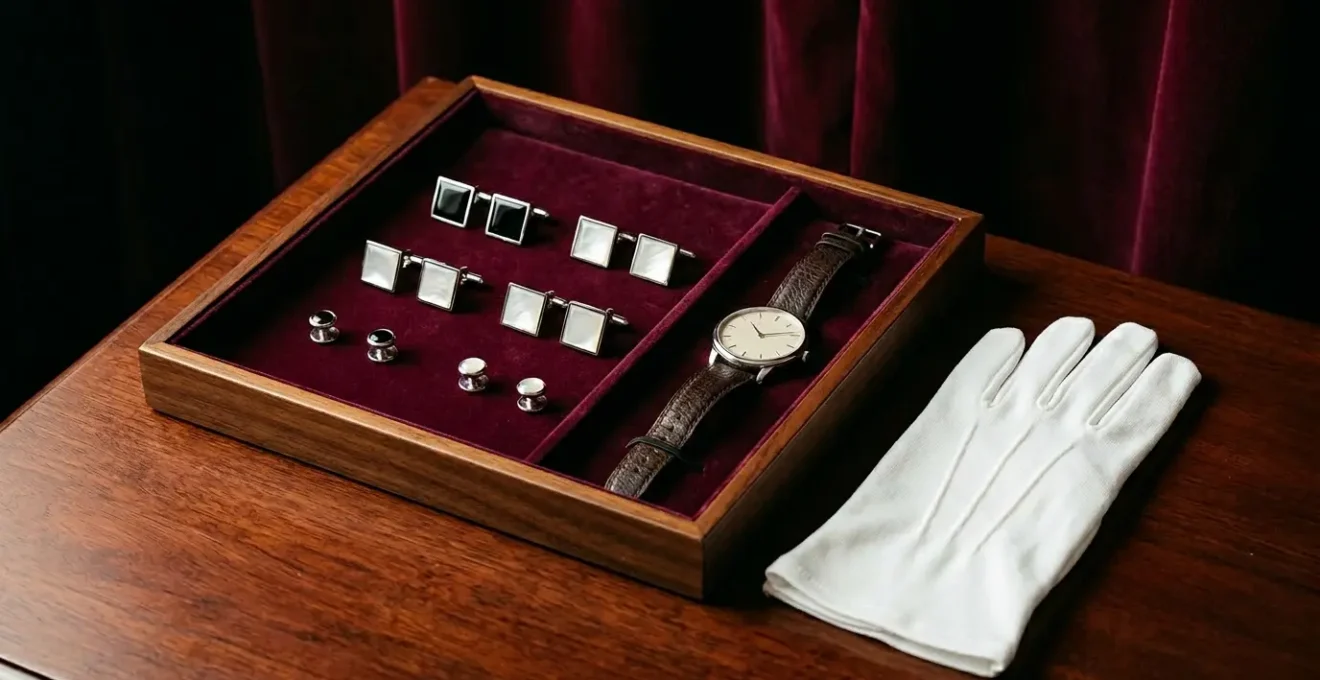
Contrary to the rigid ‘no watch’ rule, true black tie etiquette is not about prohibition but about purpose. The key is understanding that your accessories, including a timepiece, should complement the event’s formality, not distract from it. This guide moves beyond outdated decrees to teach you the principles of visual harmony and respectful presence, allowing for elegant, modern self-expression at any UK gala.
The invitation arrives, embossed on heavy cardstock: a charity ball, a royal enclosure event, a formal gala. The dress code is “Black Tie.” Immediately, a cascade of questions begins, but one looms larger than most for the modern guest: can you wear a watch? Traditionalists would offer a swift and resounding “no,” citing the old wisdom that to consult the time is an insult to your host, implying you have somewhere better to be. This rigid decree, however, belongs to an era before the wristwatch became as much an object of mechanical art and personal style as a tool for timekeeping.
Today, the landscape of formal wear is more nuanced. The question is no longer a simple yes or no. Instead, it has evolved into a more sophisticated inquiry: *how* does one wear a watch, and indeed any jewellery, in a way that honours the tradition and solemnity of a formal event while still expressing personal style? The true art of black tie adornment lies not in a checklist of forbidden items, but in understanding the underlying principles of harmony, respect, and intention. It’s about curating a presence that adds to the elegance of the evening, rather than detracting from it.
This guide will navigate the delicate balance between heritage and modernity. We will deconstruct the “rules”—from the timing of tiaras and diamonds to the silent statement of mourning jewellery—to reveal the logic beneath. By focusing on these core principles, you will gain the confidence to assemble a look that is not only correct, but truly sophisticated.
To navigate this nuanced topic, we will explore the core pillars of formal jewellery etiquette, moving from the most traditional contexts to modern applications. This structure will provide a complete framework for making confident and elegant choices.
Summary: Black Tie Etiquette: The Definitive Guide to Wearing a Watch at a UK Gala
- Why Wearing a Tiara Before 6pm Is a Social Faux Pas?
- How to Wear Jet Jewellery Appropriately for a Funeral Service?
- Diamonds Before Dark: Is This Rule Still Relevant in Modern Britain?
- The ‘Coco Chanel Rule’ Mistake That Ruins a Formal Outfit
- Gold or Silver: Which Jewellery Matches Best with Military Medals?
- The Styling Mistake That Makes Real Vintage Look Like Fancy Dress
- The ‘Jangle Factor’: Why Noisy Bracelets Kill Professional Credibility?
- Studs and Cufflinks: The Rules of Jewellery for Black Tie Events in the UK?
Why Wearing a Tiara Before 6pm Is a Social Faux Pas?
The tiara is perhaps the most potent symbol of formal grandeur, steeped in aristocratic and royal tradition. Its use is governed by some of the strictest rules in the etiquette playbook, chief among them being the prohibition against daytime wear. Historically, tiaras were reserved for the most formal evening events, such as state banquets and balls. The rule of thumb dictates that they should not be seen before 6 p.m., or sundown, marking the transition from day to evening formality. To wear one earlier is to misunderstand its purpose, treating a symbol of ultimate occasion as a mere daytime accessory.
This timing is not arbitrary; it is rooted in social symbolism. As royal etiquette expert Grant Harrold explains in a BBC interview on the subject, the tiara’s role was deeply connected to marital status. “For married ladies, it was a sign of status and would show you were taken and not looking for a husband. For the gentleman it was a clear sign not to make advances toward the lady in question.” This historical context underscores the tiara’s function as a piece of communicative jewellery, not just a decorative one. Wearing it outside of its designated formal, evening context strips it of this significance, turning a statement of status into a misplaced novelty.
Ultimately, the rule serves to protect the tiara’s unique power. By reserving it for the pinnacle of formal occasions, its impact and symbolism are preserved, ensuring it remains an emblem of true grandeur rather than a whimsical fashion piece.
How to Wear Jet Jewellery Appropriately for a Funeral Service?
While a gala represents celebration, a funeral demands the opposite: solemnity and restraint. The etiquette of mourning jewellery is entirely about demonstrating respect, and no material embodies this principle better than jet. Popularised by Queen Victoria, Whitby jet became the cornerstone of mourning attire due to its unique physical properties. Unlike glistening gems or polished metals, true jet is known for its deep, matte blackness that absorbs light rather than reflecting it. This creates a somber, non-ostentatious appearance that is perfectly suited to the gravity of a funeral service.
The choice of jet is a deliberate act of ‘negative’ expression; its purpose is to deflect attention from the wearer and keep the focus on the act of commemoration. Modern mourning etiquette upholds this principle of respect through restraint. Your presence should be a quiet statement of support, and your accessories must align with this. Flashy or reflective jewellery can be jarring in a somber environment, appearing self-involved and disrespectful to the occasion.
As this image of traditional mourning jewellery illustrates, the beauty of jet lies in its texture and depth, not its sparkle. This makes it the ideal choice for a funeral. If you do not own jet, the principle still applies: opt for simple, non-reflective pieces in dark colours or muted metals. The goal is a respectful presence, where your attire communicates empathy and deference.
In this context, less is truly more. A simple pair of jet earrings or a small brooch is sufficient. The most profound statement you can make at a funeral is one of quiet, dignified support.
Diamonds Before Dark: Is This Rule Still Relevant in Modern Britain?
The adage “no diamonds before dark” is another classic tenet of jewellery etiquette, closely related to the rule governing tiaras. Traditionally, significant, sparkling diamonds were considered evening wear, inappropriate for the light of day. According to the authoritative voice of Beaumont Etiquette, a leader in social protocol, this rule remains a useful guideline for maintaining a sophisticated appearance. They advise that “the bigger, more sparkly pieces of jewelry traditionally only come out post 6pm.” For daytime events, the recommendation is to stick with more subdued options like pearls, coloured gemstones, and simple metallic jewellery.
The logic behind this rule is about visual harmony with the time of day. The intense, fiery sparkle of a large diamond can look ostentatious and out of place in daylight. Its brilliance is designed to be captured and enhanced by the artificial lighting of an evening gala. Just as a tuxedo would be inappropriate for a morning meeting, a significant diamond necklace can feel jarring at a luncheon. The rule is not an outright ban on daytime diamonds, but rather a caution against wearing large, flamboyant pieces that are better suited for night.
In modern Britain, this rule has softened but its principle endures. Small diamond studs, a delicate tennis bracelet, or an engagement ring are now perfectly acceptable for daytime wear. The key is scale and intention. These smaller pieces add a touch of elegance without overwhelming an outfit or appearing ostentatious. The larger, more dramatic “statement” diamonds, however, should still be reserved for evening events where their glamour can be fully appreciated in the appropriate formal setting.
Therefore, while the rule is no longer absolute, its spirit remains highly relevant. It encourages a thoughtful approach to accessorising that respects the occasion and time of day, ensuring your jewellery enhances your elegance rather than detracting from it.
The ‘Coco Chanel Rule’ Mistake That Ruins a Formal Outfit
“Before you leave the house, look in the mirror and take one thing off.” This iconic piece of advice from Coco Chanel is one of the most frequently quoted rules in fashion. It is the gospel of minimalism, a warning against over-accessorising. However, a common mistake in applying this rule to formal wear is interpreting it too literally. The error lies not in the principle of editing, but in the execution. Removing an item at random can unbalance an entire ensemble, leaving it feeling incomplete rather than chicly minimalist.
The goal of the Chanel rule is not simply to reduce quantity, but to achieve clarity and focus. A more sophisticated application is what modern stylists call “curated minimalism.” This approach involves consciously building an accessory story around a single focal point. As Coco Chanel herself demonstrated, this is a guiding principle, not a strict command.
Before you leave the house, look in the mirror and take one thing off.
– Coco Chanel, Fashion wisdom commonly attributed to Chanel
Instead of removing an item, first identify your statement piece—be it a bold necklace, chandelier earrings, or an artful cocktail ring. This is your anchor. Every other piece of jewellery should be a supporting actor, chosen to complement and enhance the star of the show without competing for attention. If you are wearing a show-stopping necklace, opt for simple stud earrings. If your earrings are the focal point, you might forgo a necklace altogether in favour of a delicate bracelet. The mistake is not wearing too much, but wearing too many pieces that are all vying to be the main event. This creates visual noise and undermines the elegance of the outfit.
The true lesson from Chanel is not about subtraction, but about intention. Every piece should have a purpose. By ensuring your accessories work in harmony, you achieve an elegance that is both confident and seemingly effortless.
Gold or Silver: Which Jewellery Matches Best with Military Medals?
For formal events in the UK, particularly those with a military or royal connection, the etiquette surrounding the wearing of medals is paramount. When a guest or their partner is wearing decorations, any accompanying jewellery must be chosen with extreme care to ensure it complements, rather than competes with, these symbols of service. The primary principle is one of deference; the medals are the most important accessory and all other choices should reflect that.
The choice between gold and silver jewellery is largely dictated by the dress code and the medals themselves. For Black Tie events, where only miniature medals are worn, the general consensus favours silver or white gold. These cooler tones tend to harmonise better with the varied colours of medal ribbons and the silver or cupro-nickel of the medals themselves, creating a cohesive and respectful look. Gold can sometimes clash, creating a visual distraction. The goal is visual harmony, ensuring the eye is drawn to the honours, not to conflicting accessories.
The following table, based on formal UK protocol, provides a clear guide for coordinating jewellery with military honours. Adhering to these guidelines, as detailed in an official analysis of medal protocols, is a sign of deep respect.
| Dress Code | Medal Type | Jewelry Guidelines |
|---|---|---|
| White Tie | Full-size medals with up to 4 breast stars | Minimal jewelry to avoid competing with medals |
| Black Tie | Miniature medals only | Silver or white gold complements most medal tones |
| Morning Dress | Full-size medals on left lapel | Restricted to special official functions only |
Furthermore, military medal etiquette also dictates a single row arrangement for mounting, ensuring a neat and orderly appearance. This reinforces the idea that all other adornments should be equally understated and meticulously chosen to maintain an overall impression of dignity and order.
In essence, when medals are present, your jewellery should retreat into a supporting role. Choose simple, classic pieces in complementary metals to show honour to both the occasion and the service represented by the decorations.
The Styling Mistake That Makes Real Vintage Look Like Fancy Dress
Wearing vintage jewellery can add a unique layer of history and personality to a formal outfit, but there is a fine line between looking chicly nostalgic and looking like you are in costume. The most common mistake is what is known as the “head-to-toe vintage trap.” This occurs when someone pairs a vintage dress with a vintage handbag, vintage shoes, and multiple pieces of vintage jewellery from the same era. While well-intentioned, this approach often results in an outfit that feels dated and theatrical, rather than sophisticated.
The secret to successfully integrating vintage pieces into a modern formal look is balance and context. Fashion experts advise anchoring one significant vintage piece—such as a beautiful Art Deco brooch or a pair of 1950s earrings—within an otherwise contemporary ensemble. This creates a point of interest and tells a story without overwhelming the entire look. The vintage piece becomes a conversation starter, a nod to the past, rather than a full historical reenactment. This concept of “modern heritage” is about curation, not costume.
This image perfectly illustrates the principle: a classic Art Deco piece is placed against modern fabric, suggesting it is part of a contemporary outfit. The key is to let the vintage item shine by surrounding it with clean, modern lines. For example, pair a Victorian locket with a minimalist black gown, or an ornate retro cocktail ring with a simple, tailored tuxedo for a woman. By mixing eras, you create a look that feels both personal and timelessly elegant.
Ultimately, your vintage jewellery should feel like a part of your personal style, not a costume you have put on for the night. Let one piece be the hero, and it will elevate your entire outfit with its unique character and history.
The ‘Jangle Factor’: Why Noisy Bracelets Kill Professional Credibility?
Elegance is often as much about what is unheard as what is seen. In any formal or professional setting, your accessories should never be a source of distraction. This brings us to the “jangle factor”—the noise created by a stack of clashing bracelets or overly sonorous charm jewellery. While a stack of bangles might be perfect for a casual festival, it is decidedly out of place at a formal gala, a quiet awards dinner, or in a professional environment. The sound can be distracting to others and undermines the wearer’s sophisticated presence.
The principle at play here is one of respectful presence. Your choice of accessories should show consideration for the environment and the people around you. As the experts at Robinson’s Jewelers aptly put it, “if your jewelry is making noise when you move, you might be overdoing it.” A formal event is an occasion for quiet conversation and focus, and auditory interruptions from your accessories are a mark of sartorial thoughtlessness. The same logic applies to large, dangling earrings that might clink against a glass or a long necklace that could knock against a table.
To avoid this, etiquette experts advise limiting wristwear. The rule of thumb is to wear a watch and, at most, one or two coordinated bracelets on the same or opposite wrist. These should be chosen so they do not clash together noisily. A classic tennis bracelet, a soft gold chain, or a single elegant cuff provides the desired touch of wrist adornment without the distracting soundtrack. The goal is silent elegance, where your jewellery complements your movements without announcing them.
Before leaving for an event, do a simple movement test. If you can hear your jewellery, consider editing your selection to ensure your elegance is seen, not heard.
To bear in mind
- True elegance comes from understanding principles like harmony and respect, not just following rules.
- Jewellery should always be appropriate for the time of day and the solemnity of the occasion.
- Curate your look around one statement piece to avoid visual clutter, and ensure your accessories are never a noisy distraction.
Studs and Cufflinks: The Rules of Jewellery for Black Tie Events in the UK?
We return to our original question, grounded in the specifics of a black tie dress code. While much of formal jewellery etiquette focuses on women’s adornment, the rules for men are fewer but no less strict. In a traditional black tie context, a gentleman’s jewellery is almost exclusively functional. As noted by the experts at Ox & Bull Trading Co., a specialist in men’s accessories, “Traditionally, the only jewelry for black tie events are cufflinks and shirt studs.” A watch, if worn, should be a discreet dress watch—slim, with a simple face and a black leather strap, worn to be unobtrusive.
The sophistication of a man’s black tie attire is judged on these small details. The most important rule is that the cufflinks and studs must be a matching set. Mixing metals or styles is a clear sign of an amateur. The classic and always correct choice for black tie is a set made of polished silver with black onyx inlays. This combination is timelessly elegant and harmonises perfectly with the black and white of the tuxedo. For the even more formal White Tie dress code, the only acceptable choice is simple, elegant mother-of-pearl.
While the rules are rigid, the stud and cufflink set is also the one accepted place for a gentleman to express a touch of personality. Sophisticated options include sets with subtle knot designs, understated geometric patterns, or a small, tasteful family crest. The key is subtlety. These pieces are meant to be discovered upon closer inspection, not to shout across the room. They are a final polish to the outfit, a quiet statement of quality and attention to detail that signals true understanding of the dress code.
Action Plan: Audit Your Black Tie Jewellery
- Matching Set: Verify that your shirt studs and cufflinks are a matching set. Do not mix metals or designs.
- Dress Code Alignment: For Black Tie, ensure your set is onyx, silver, or another subtle, elegant design. For White Tie, confirm you are using simple mother-of-pearl.
- Personality Check: If expressing individuality, ensure it is through sophisticated details like subtle enamel or a family crest, not novelty designs.
- Watch Selection: If wearing a watch, confirm it is a slim, classic dress watch with a black leather strap, not a sports or chunky metal watch.
- Overall Cohesion: Ensure all metallic elements (watch case, studs, cufflinks) are in the same colour family for a harmonious look.
With these principles in mind, you can now approach your next formal event not with anxiety about rules, but with the confidence to curate a look that is both respectful and authentically you.